Episode 2 – Vitriol, Part 14


The airlock sealed behind them.  There was no need to pump in air, but Brooks pressed on the ‘hold’ button all the same.  Now that they were back inside the Hurricane, he felt secure in talking.

He only need glance to Dr. Logus.

“Interesting fellow,” the man commented.

“With an active imagination,” Brooks added.  “What do you make of his story?”

“That he’s the rightful governor?  That Ban Tede is the paranoid one?  His clear bias against non-humans?  Or his claim that the CR killed a man by looking at him?”

“The last,” Brooks replied dryly.

“Fanciful, at best.  No CR on record has ever been able to do something like that.  And rare as they are, that’s still tens of thousands of cases.”

“So either the CR used some other method or it’s just an accusation.”

“It’s very common for Cerebral Readers to face this sort of problem,” Cenz noted.  “There are no reported cases among my species, but most others have similar conditions – in nearly all of them, CRs face a greatly increased rate of assault, murder, and wrongful imprisonment, along with general social isolation.”

“He’s made his goal clear as well,” Logus said.  “He wants more people.  Perhaps he hopes to barter the CR for your assistance in getting more people here.”

“I can’t say I would recommend the place based on what I’ve seen so far – as short as it’s been,” the Captain commented.

“Nor I,” Cenz said.  “And not even just among my own kind for his clear bias against me.  In the Governor and his entourage I see signs of long-term radiation damage and general poor health.”

Outside the airlock, Brooks noticed that Urle was waiting – and behind him was nearly every other person on the ship.

“We’ll talk more later on this,” Brooks told Logus.  “Gather the information you can, I’d like to know more about this place before I pass judgment on it.”

Opening the door, Brooks stepped into the ship proper.

“Captain,” Urle said.  “That seemed a brief meeting.”

“I’m going to go talk more to Governor Tede,” Brooks told Urle and the assembled crew.  “We have permission to move among the colony, though they clearly have issue with non-humans.”

“Would you prefer we wait on the ship?” Cenz asked.

Brooks shook his head.  “No, I’m not going to force anyone to stay on the ship after that rough ride we’ve had out here.  The Governor said we were welcome and I intend to take him at his word.  The colony still uses a market economy, so we’ll get you all some External Trade Credits, in case you’d like to patronize any small businesses here.”

“I am glad,” Cenz replied.  “I am highly curious to see more of such a young colony.  And still in a rudimentary form of capitalism as well!  It will be fascinating.”

Brooks glanced over them all.  “No one go anywhere alone – just to be on the safe side.  Their bylaws state that the open-carry of weapons is allowed, so I suggest that you all take sidearms.”

“Seriously, Captain?” Cenz asked.

“Yes,” he replied bluntly.  “In places like this they tend not to respect people who are not carrying weapons – I’ve known others like it.”

Urle nodded.  “I’ll unlock the armory and issue sidearms to anyone who plans on going out.”

The Executive Commander noticed Hannah watching through the rest of the assembled crew.  She looked nervous.  He had always taught his daughters to be respectful of firearms, and he knew she had taken to it with something approaching a phobia.

Someday, he’d have to teach her how to use one, he knew.  But he wanted that day to be far off.

“Excuse me,” he said, stepping through the crowd towards her.

“All right, I’m heading out,” Brooks said.  “They have a curfew at 2200 hours, and I’ve sent a sync to your systems to update them to local time.”

Brooks left out the hatch, and Cenz approached Kell, who seemed oddly lost in thought.

“Ambassador, I think I feel like going for a walk.  Would you care to join me?  I know you must be curious to see this new colony.”

“No,” Kell said.

Cenz recoiled slightly.  “Ah . . . my apologies for assuming.  If you do go out, however, please let me know – I will be happy to join you.”

“I will not,” Kell said, not even looking to Cenz.

“Just remember that the Captain has given a directive for no one to go out alone.  I believe this applies even to you, Ambassador.”

The Shoggoth gave no response and moved away, back towards his quarters.  Cenz was left with a puzzled expression on his face as Pirra approached him.

“It’s acting . . . weirder than usual,” she said softly.  Kell seemed out of earshot.  “I thought the Ambassador wanted to see these places.”

“And this is a very unique one, by his experiences.  It does seem as if something is bothering the Ambassador, and I fear he will ignore the Captain’s orders.”

“At least it’s staying on the ship for now.  Perhaps it’s too much too fast,” Pirra said.  “But on the topic of these locals . . . what are your thoughts on them, Commander?” she asked.

“I think I feel like going for a walk and finding out more,” he said.  “You and Alexander are free to join me if you wish.”
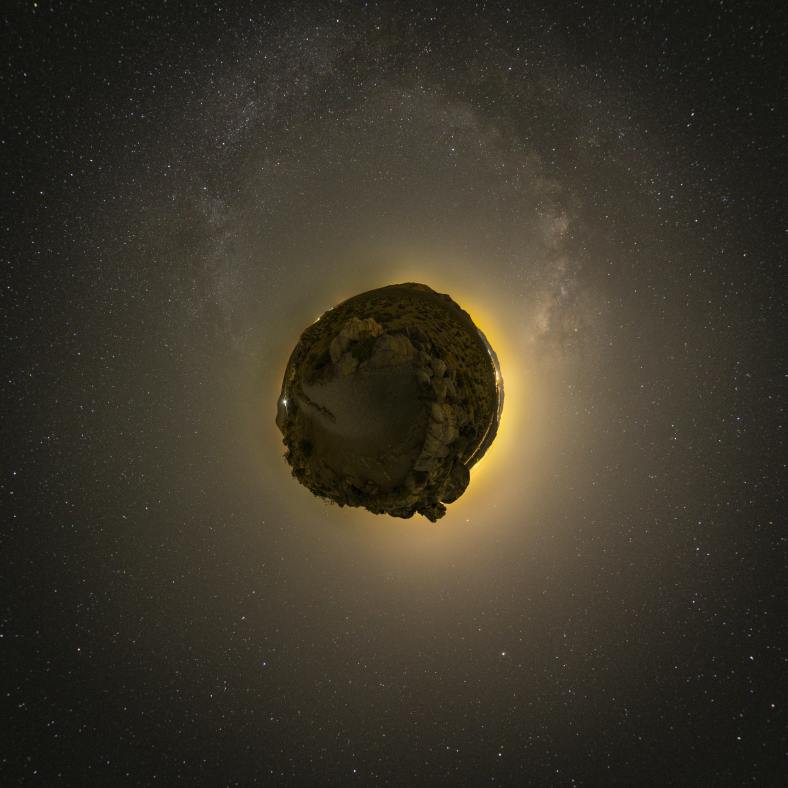

< Ep 2 Part 13 | Ep 2 Part 15 >

Part 2 is here! Read by author Nolan Conrey, and covering all events from last weeks posts!

Afraid the holiday and life have put me a bit behind on the audio work – a lot of hours go into each section. I’m going to continue to aim for each Friday to cover the week in question, but we’ll see how it works out! Lots more to come for sure, though, keep tuning in!

Vitriol, Audio Book, part 2

Episode 2 – Vitriol, Part 13


The hangar in New Vitriol could have fit a ship twice their size and three times their length, but the docking clamps and boarding tube hooked into place without difficulty.

“Connection isn’t very good,” Urle noted.  “Just above the minimum standards.  Air quality is pretty poor, too.  Nothing toxic, but a much higher level of bacteria and chemical compounds than I would call healthy for long-term exposure.”  He glanced to Brooks.

“Keep your kids on the ship for now,” the Captain said.  “And you stay here for the time being.  I’ll take Dr. Logus and Cenz and we’ll go meet their welcoming party.”

“Aye, sir.”

They went down the tube.  On the other end, the airlock door opened, and a man who could only have been the governor was awaiting them.  Along with him were a handful of officials and several guards, only the leader of whom had his face visible.

His grin was surely meant to be friendly, but nothing about it conveyed warmth.  His outfit was a mix of sensible and faded grandiose, with a high collar that appeared to have been cut down after some of the ribbing had folded.

“Welcome to New Vitriol, gents.”  His eyes went to Cenz, and for a moment his smile faltered.  He didn’t seem to know what he was looking at.

There was no gravity on the station, and Brooks floated himself forward, drawing the Governor’s eyes back to him.  “I’m Captain-Mayor Ian Brooks,” he introduced himself, before gesturing to the others.  “Dr. Arn Logus and Commander Cenz.”

“What is he, a fancy drone?” the governor asked, eyes going back to the Commander.

“I am what your people call a Coral or Polyp,” Cenz answered.  “From the Dulea system.”

“An alien,” the man said.  His smile had faded, and he gave Brooks a glare.

“We welcome outsiders, Captain-Mayor, but things aren’t free on New Vitriol.  And prices are higher for some.”

“We’ll be happy to take you up on your hospitality and pay you for your services,” Brooks replied.  “So long as it’s safe for my people here – all of my people.  It is one of the most important laws of interstellar trade – that all travellers can expect welcome and safety.”

“Everyone’s safe on New Vitriol,” the Governor replied, his tone turning a little sour.  “As long as you don’t plan to stay – we don’t promise that.  We got supply problems and we don’t want population in here that’s not going to help us get more population.”  He was looking pointedly at Cenz, then shrugged expansively.  “More bodies means more workers and more workers means more resources.  Surely you understand.”

“None of us are coming to stay, Governor . . .” Brooks trailed off.  “Perhaps a proper introduction is in order.”

“Nec Tede,” the Governor said, then gestured to the guard without a helmet.  “This here’s my Chief of Security and second-in-command, Hoc Rem.”

Brooks nodded to the latter, who regarded him coldly, saying nothing.  He didn’t look like a local; his neck was thick with muscle, as if he’d come from a place with much higher gravity.

But Nec Tede was still talking.  “I’m not just the leader of New Vitriol, but the Rightful Governor of this system – though you wouldn’t know that by talking to that Judas, Ban.”

Brooks wasn’t sure who Ban was, and the Governor must have noticed.  “I heard you just spoke with him – the head man over at Old Vitriol.  Ban is a crotchety bastard who hates meeting face to face.”  The man slid a thumb across his throat.  “Paranoid, ya see, about assassins.”

“Oh my,” Cenz said.  “I was not aware there was a substantial risk of such violence in this system.”

Nec chuckled.  “Just in his mind.  Man is the reason we were banished.  He doesn’t trust anyone with a claim on the Tede line.”

“That’s unfortunate,” Brooks said.  “Governor, we’ve come to speak to you about-“

“I know who you’re looking for.”  The man grinned and tapped his head.  “Word spreads faster than light in this system.  I know the freak you’re looking for – and she’s here.”

With how unfruitful the trip had been so far, even this kind of response made Brooks feel like this was going too well.  “Can you arrange a meeting?  I would like to talk to her.”

“Sure,” the man said.  “That’ll be no problem.  Except you might not live to get a word out.”  The man chuckled, an ugly sound.  “Seein’ as she likes to kill people just by lookin’ at ’em.”


< Ep 2 Part 12 | Ep 2 Part 14 >

Episode 2 – Vitriol, Part 12


Brooks entered the bridge.  Cenz had taken the watch and seemed distracted reading a tablet.  But the being’s attention could go in many directions, and he was fully aware of Brooks’s arrival.

“Commander,” Brooks said, giving him a nod.

“Captain,” the being replied.  “We are only seven minutes from entry to this system’s Kuiper Belt.  Our information indicates that the colony of . . . New Vitriol . . . is a mostly-rocky object approximately ten kilometers in diameter.  We are not aware of how large the population is, but some of the public records we had access to in the last two colonies suggest Vitriol had initially a population of 300,000 or so – thus New . . . Vitriol will have less than that.”

Brooks caught the way the coral hung up on the word.  “Is something bothering you, Cenz?”

“Ah, yes sir.  This name – Vitriol.  It’s hard to translate into my language.  And even when translated, I’m having trouble understanding it.”

Brooks moved to sit.  “Ah, yes.  Well . . . how would you define the word?”

“Angry critique?  But there is an element of the translation that I just do not understand.”

“That’s because the word implies more than anger – there is an element of intentionally wishing harm in it.”

Cenz was silent for a moment, and his face screen went to a strange sort of default blankness.  Lights in his suit flashed in confused patterns, and staring at it was dazzling.

“I understand that many species have had wars and conflicts.  My own people have become involved in those of the Sapient Union, but I was not directly.  In a way, I can understand that these stemmed almost always from material causes – the lack of or desire for something vital to life.”

“But cruelty is not something you are able to really understand,” Brooks commented.

“. . . that’s correct, Captain.”  He was silent a moment before adding; “In some ways I feel it gives me a permanent blind spot when it comes to other species.  Your natural evolution has, for some reason, given your species the ability to have these thoughts.  And yet . . . mine cannot seem to conceive of them.”

Brooks wasn’t sure how to reply to that; it was true, though.  His species was capable of cruelty; it was some kind of by-product of evolution that served a purpose that was hard for him to justify.  And humanity was not alone; most other sapient species had, at least somewhere in their history, shown such behaviours.

None of them were proud of it, but they could not change their pasts.  They could only try now to rise above.

“At times your own kind are difficult for us to understand,” he finally said.  “We’re singular minds, not collectives.  I suppose, though, I am glad that your kind can’t feel it.  You’re not missing out on much of value.”

“Why would they name their colony a term that implies such cruelty?” Cenz asked.

“Anger, I would guess.  They felt slighted, and they wanted everyone to know it.  It’s not a mature thought.  But we are formed largely by our environments and conditions.  Given certain kinds of conditions, we can turn out to think and act in ways that seem insane – even to others of our own species.”

He felt oddly cold, but the only reason he might have felt that would be if Kell was present; yet the sensors confirmed he was in his cabin.

Cenz turned to business.  “We’re about to come back into realspace in thirty seconds.”

Brooks put on the comm.  “All personnel, prepare for reversion to realspace.”

“I will be very grateful to have this shaking cease,” Cenz said.

“Are you feeling all right?”

“Well enough.  I might be what you’d call sore for a few days.  But hopefully we won’t have to leave here immediately, so I can recuperate somewhat.”

Brooks knew he’d have to make sure he fully understood the extent of harm that the being had suffered through the trip.  Cenz was a dutiful officer, and he was not sure if this trip had given him the equivalent of a headache or broken rib.

Making a note to himself to check on that later, he composed himself for their immediate concern.

With a lurch they re-entered real space.

Brooks glanced to Cenz and saw a placid smile on his face, which reassured him.

Checking that everyone else on board was fine, he then switched to external view and found the colony of New Vitriol.

“I’ve sent a message, but we’re just getting an automated reply,” Cenz noted.

Urle entered the bridge, followed by Kell.  The compartment was beginning to feel crowded.

“Uknown ship, follow beacon course laid out for you.”

It was a message, but not an open channel.

Cenz looked to Brooks for orders.

“Take us in,” he ordered.

Kell was staring off, not at the monitors, but just above them.

Urle caught his direction of gaze.  “What is it, Kell?  You look like you’ve just seen a Leviathan.”

“No,” the Ambassador replied.  “But I see something.  There is a presence here . . .”

“What kind of presence?” Brooks asked.  “Is it a danger?”

Kell shook his head.  “I believe it is the seer.”

“Seer?” Urle asked.

“It’s a very old term from the English language,” Cenz chipped in.  “For a being who is able to ‘see’ the future.”

“Or other things,” Kell said.

“Such things are superstition,” Urle noted sourly.

“Perhaps,” Kell replied.

Brooks arched an eyebrow but said nothing on the topic.

“I want everyone dressed and assembled for disembarkment in ten minutes.  We set down in fifteen.”


< Ep 2 Part 11 | Ep 2 Part 13 >

Episode 2 – Vitriol, Part 11


Living on a starship forced anyone to get used to being in a confined space, but the Hurricane was too small for her.

Pirra had felt agitated for most of the trip – partly a result of instinct, and partly the result of personality.  Alexander seemed concerned about her, and it only grated on her more.  It wasn’t his fault, and it was quite caring, but it was still bothering her.

Trying not to show it was taxing.  She forced herself to be deliberate in each action, to focus on the moment.  But when there was little to do in the moment, that became difficult in its own way.

And the most annoying part was that there was something else bothering her, but she just didn’t want to talk about it.

Digging into her bag, she took out a small stone from a pouch.  She didn’t want Alexander to see that she had it and folded her wing drapes around her body.

He glanced at her out of the corner of his eye.  He knew when she was hiding something, but he said nothing, for which she was grateful.  The hardest part of their marriage had been unlearning aspects of their own behaviour that did not mesh.  Humans seemed more open in general than her kind, who had higher expectations of privacy.

Going into the central corridor, she began pacing – or the equivalent, in zero-g, simply pushing herself one way down the hall and then back the other way.  They had gone through the dashgate only an hour before and it would be another seventeen before they even arrived at this third colony.

The ship was vibrating again, but at least not as much as it had been during the first dash, and even if she could only feel it when she touched a surface, the sound was alway there.  The Executive Officer had taken the time before they entered to try and attune the ship better to the gate.  It was newer, though already showing some signs of worse maintenance than the first.

Urle had figured that within ten years it’d be far worse than the first one, and it all just made her wonder how these colonies ever hoped to grow without caring for their own infrastructure.

Now the rattling of everything was grating on her.  It reminded her of a steep cliff starting to collapse.

“Too many things compounding,” she said softly, opening her hand to look at the stone.

It was only five centimeters long, pierced with smooth holes not quite large enough for a finger to go in.

It was silent in her hand, but given a good wind it would have sung.

A heavy clunk caused her to look up.  Closing her hand around the stone, she saw the Chief Science Officer as he came around the corner.  She came to attention and saluted him.

The electronic face on Cenz’s suit turned to a polite smile.  “At ease, Lieutenant.  I see I am not the only one out for a walk,” he said cheerfully.

“It helps a bit,” she replied neutrally, letting her salute drop.  It would have been overly-formal even on-duty, but she’d felt caught.

Perhaps Cenz knew that.  “I can leave you to your walk if you wish,” he said.

She struggled with the desire to say yes.  Cenz was possibly the nicest and most innocent being she had ever known, and adored conversation.  To walk away from him now felt like being mean to a child.

“It’s fine.  How are you, sir?  I hope this leg of the journey is not bothering you as much as the last.”

“The last was quite unpleasant,” he admitted.  “But only that – this leg is only . . . well, annoying.  I cannot actually quantify this, but I think I feel the vibrations far more than the rest of you and it makes all of me want to hide in their shells.”

She knew only a little about the biology of his species; a hundred or so individual polyps that cooperated with complex neural nets they built between chunks of calcified rock that were constructed over long periods of time.  Each polyp was only somewhat intelligent, but when many combined they formed an impressive intellect.

He started to move along again and she kept pace.  Even here, it was incredible how easily he seemed to move; on the Hurricane they were functionally in zero-gravity.  But to move that water-filled suit in the artificial gravity of a place like the Craton had to require massive strength.

“May I ask you a question, sir?” she asked.

“Of course,” he replied.  “And please – you can drop any title or formality.  They’re one of the few aspects of being on the Craton that I dislike.  There is no hierarchy among polyps.”  He chuckled, and she gave a smile.

It occurred to her that they had both become so used to being around humans that they were both faking their mannerisms to each other.

“Is it true that on your homeworld your species are not anything like a humanoid or biped?”

“Your information is accurate,” he replied.  They reached the end of the corridor and turned to float back down the other way.  “We are something more like crawling masses on our homeworld – it works well for moving over reefs in the shallow seas we come from.  However, we may form our sections as we like, and while early contact had us being in such forms, we realized that being more humanoid would help us relate with such species better.”

“Was it hard to learn to become . . . a biped?” she asked.

He considered a moment, his screen appearing thoughtful.  “In a way.  It is somewhat like the strength-training a species might undergo before moving onto a higher-gravity world.  We don’t usually break ourselves up, but there’s no reason we can’t, if we’re careful.  So I spent a few years breaking myself into smaller pieces and then rearranging them into something like a humanoid.”

“A few years?”

“I know it sounds like a lot, but while I was doing that I was also getting an education on living among other species – so it was not as boring as it sounds.”  He laughed again, and for a moment she saw specks of light in the water around his face screen.  The polyps were lighting up in different colors – perhaps that was his own kind’s form of a laugh.

“Still, that sounds like a lot of effort.”

“I won’t lie – it was!  But it was worth it.  Because now I can walk and talk face-to-face with beings such as yourself, or the Captain.”

“Does it become awkward among your own kind?”

“Not really – we have no defined shapes.  They will know from looking that I took this form, and surely figure out why.  But if anything, it will only lead to some more questions!”  He looked down to her hand.  “May I ask you a question now, Pirra?”

“It only seems fair, sir.”

“Just Cenz, if you please.  What is that you’re holding?”

She hadn’t realized he’d noticed it.  With how clunky his suit looked, and how his face screen only showed forward, it was easy to imagine he didn’t see well.

“Oh, it’s . . . it’s a singing stone,” she said.

“A singing stone . . . oh, yes, from your homeworld.  They have quite the significance to some groups there, from what I understand.  I hope my question was not rude.”

“No, sir- Cenz.  You’re fine,” she said, opening her hand to look at it.  “You’re right, though.  Among some groups on my homeworld, these were quite important.”

Cenz was quiet a moment.  When he spoke again, her translator turned his voice a little softer.  “I am not an expert on your people’s cultural history, Pirra, but I understand that there was much sectarian violence on your world until the last few centuries.”

She wasn’t sure how to reply to that.

“It’s not an issue anymore,” she finally said.

“Ah,” Cenz replied.  He seemed uncertain.  “That’s . . . good to hear.”

She put the stone in her pocket.  “Thank you for the conversation, Cenz.  I think I’m going to return to my cabin.”


< Ep 2 Part 10 | Ep 2 Part 12 >

Episode 2 – Vitriol, Part 10


“I wanted to stay, though.  Captain can I stay?” Hannah asked.

Brooks smiled to her, but didn’t dismiss the idea immediately.  For a city-ship, having its younger populace take an interest in how things worked was something they both hoped for and cultivated.

This was not the most drastic of circumstances.  On a smaller and younger colony like this, it was likely they would be able to talk to the Governor initially via signals rather than a face-to-face after landing.

It was a place outside the Sapient Union, too.  Sometimes it was a mistake to only let the up-and-coming see how things worked internally.  It would mean they were caught flat-footed when they had to deal with outside officials.

“I’m all right with it,” he decided.  “Executive Commander, how do you feel about it?”

“So long as you stay quiet, Hannah, you can stay.”

“I want to stay too!” Persis interjected quickly.

Urle was calm but firm.  “No, Persis.  You can sit in another time, but this time Hannah gets to.  No pouting – this is not a game.  This is very serious.  Now go back to the cabin.”

“Next time?” she asked sadly.

“I can’t promise next time.  But eventually, yes,” Urle added.

The girl left slowly, but did go.  Urle confirmed via sensors that she had, in fact, returned to her room, while Brooks moved to sit in the co-pilot’s chair.

Hannah sat down on a stool in the corner and strapped herself down, watching with eager eyes.

Urle flipped on the intercom.  “Attention, we will be exiting the dash in approximately thirty seconds.  There is likely to be turbulence, so everyone please strap in.”

Checking that Hannah did so, and that the sensors confirmed everyone else had – save Kell – Urle watched the seconds tick down.

Unlike a proper zerogate, there was no exit to catch them.  It was more like being thrown, and the ship itself would have to engage a tenkionic braking system that would cause them to shed the colossal amounts of energy they had accumulated.  Simple physics rendered it impossible to be moving faster than light and exist in their own dimension.

No being could possibly have manually exited such a jump.  The timing was so precise, the speeds so great, that the most sensitive computers possible still found it taxing.

Urle simply watched the numbers tick down, and they felt the ship begin rattling with extra fervor.

The exit was rougher even than the journey, and they were all thrown forward – such exits were hard enough to cause injuries, and the Hurricane‘s own dampeners strained to keep it under control.

Brooks felt himself thrown forward, held back only by his restraints.  The whole ship lurched, then became still.

“Ow,” Hannah said flatly.  “Could that have been any bumpier, dad?” she asked.

“Shush, you’re fine,” Urle said, checking her readouts while Brooks suppressed his smile.

“Everyone seems fine,” Brooks added, checking the rest of the crew.

“Did Kell fall?” Urle asked.  He sounded a bit hopeful.

“No.  Barely even twitched, according to this.”

Urle sighed.  “Someday, the Ambassador’s going to be in a genuinely rough exit and regret not strapping in.”

Ahead of them, a massive and glorious gas giant loomed.  It was vaguely like Jupiter, but over twice the mass and far deeper in color.  Around it, moons nearly as large as Earth orbited.

Of those they could see, most were varied and extremely volatile; the tidal forces of the massive planet pulled them to and fro with each orbit, keeping their insides molten and active.

But one of the smaller moons seemed relatively stable, internally.  It was an iceball smaller than Earth’s moon, with a rocky core – certainly rich in the materials needed for a growing colony.

Heat readings from the moon broadcasted the presence of the settlement – even embedded in ice there was no way to hide the infrared energy of colony-scale fusion reactors.

“We’re in range,” Urle noted.  “Getting an automatic query.  Making our request.”

A few moments passed.  “Getting reluctant permission to talk to the Governor.  It’s your show, Captain.”

Brooks joined the channel.  “Greetings, Governor, this is Captain-Mayor Ian Brooks.  I have come trying to find a specific person who-“

“You came from Tede?” the male voice came back.  There was a visual channel, but the man wasn’t using it.

“Tede?” Brooks asked.  “We just took the dashgate from New Begonia-“

“Tede!” the man said.  “Those bastards lied to you, Captain.  They’re all liars and sneak-thieves.”

“Lied to me about what?” he asked.

“Anything – everything.  They’re a blight, a stain on the memory of Corran Tede.”

Urle gave him a confused glance, but Brooks kept his face a pleasant mask – he was broadcasting in the visual band even if the Governor wasn’t.

“I see.  That is unfortunate to hear, Governor.  However, I still have my mission – perhaps you’d be able to assist me in that.”

“Why?” the voice insisted.  “You’ve already been poisoned by them, I know it.  It’s all part of their plan, to destroy Tede’s legacy and set themselves up as no better than those decadent whoresons on the homeworld.”

Brooks let his annoyance show.  “Governor, if you have this much of a grievance with the other colony – whatever it may be called – I suggest you speak to them about it.  I am not here on their behalf.”

“No?” the voice challenged.  “We know they’ve been in negotiation to join your Union of false prophets so you can do their dirty work for them.”

“No, Governor, they have not.  They did not even want us to stay any longer than necessary, as a matter of fact.  We spent less than eight hours at the colony – far too little to work out any sort of accord.”

There was a long silence.  Brooks had a gut feeling that prompted him to continue on.

“However, if you wish to speak to one of our diplomats to be assured that we have not entered into any accord with the other colony – or to seek assistance in arbitrating your differences, then I will be happy to summon one who could arrive in a week or so.”

Silence.

Finally, a reply came.  “That won’t be necessary.”

“Very well, Governor.  Now, there is a person I am seeking – they are an unusual individual with strange gifts-“

“I know who you mean,” the Governor said.  “We threw her out.”

Brooks felt his heart beat faster.

“Do you mean to tell me that you spaced this individual?”

“No,” the voice came back.  It was reproachful, if anything.  “They’re with the other traitors.  Not the ones at Tede, the ones at New Vitriol.”

Brooks frowned.  “Another colony?”

“The cowards fled out farther from the system,” the Governor sneered.  “All a buncha mutants and rejects who didn’t want to keep with the true teachings of the Dawn.”

“As unfortunate as that sounds, I need to find this individual.  Where can I find New Vitriol?”

There was a pause again.  “We can send you the data and you can have permission to use our dashgate – on one condition, Captain.”

“What is it?”

“Tell them to go to hell.”

The connection was severed and Brooks looked to Urle.  The two men just stared at each other for a moment when Hannah spoke.

“He was so rude!” she said.  “And what’s a horse-on?”

“Nothing,” Urle said immediately.  “Forget it.  Now . . . go back to your cabin, if you will.  The Captain and I have work to do.”

“All right,” she said, pushing off her stool to float towards the door.  “And if you don’t know then I’ll go look it up.”

After she left, Urle groaned.  “Shouldn’t have let her stay.”

“Well, who could have known they’d be this crazy out here?” Brooks replied.  “I’ve heard of colonies getting insular and . . . unhealthy, but this is a severe case.  At least they don’t seem actively hostile.”

“I’m keeping all the sensors and the defense grid ready just in case,” Urle muttered.  “They did send us information, though.  It seems their jumpgate is on a nearby orbital path, lagging behind their colony a little.  It’ll be around to us in about six hours.  The dash, though . . . that looks like it’s going to be another eighteen.  I hope it’s a little better maintained.”

Brooks grimaced.  “All right.  Then let’s get some rest and hop it in a few hours.  The faster we get out of this system the better.”

“You go ahead and sleep through,” Urle told him.  “I’ll take a watch then get Cenz to relieve me.  You can take the shift after him.”

Nodding, Brooks got up and stretched.  “All right, then, see you later.”


< Ep 2 Part 9 | Ep 2 Part 11 >

Episode 2 – Vitriol, Part 9


“A dashgate?” Urle echoed.  “Well, the Hurricane is fit to travel through them, but I can’t say I’m thrilled at the prospect.”

“I’m not any happier,” Brooks replied.

After returning to the shuttle, Brooks had sent out a return signal to everyone with them.  He had no doubt that it would have been safe for them to stay out their fourteen-day visas here, but they were here with a purpose, and he did not want to push the patience of the colonists.  One day, they might actually feel ready to engage with the Sapient Union.

In the cockpit of the shuttle he had gathered Urle, Logus, and Kell.  Or the latter had, at least, decided to join them.

“What is the issue with dashgates?” Dr. Logus asked.  “They’re in standard use within planetary systems – they’re all over the home system.”

“Yes, but those are very well-constructed and maintained gates,” Urle explained.  “In frontier systems, things tend to be of lower quality and in poor repair.  On top of that, the tech is just rougher around the edges than a zerodrive.”

“I have not actually travelled in one,” Kell noted.  “I left Earth in a special ship that was allowed the use of a zerodrive further in the system.”

Urle took a deep breath.  “Likely because some people react poorly to dashgates and command did not want to risk you getting sick so early in our co-existence, Ambassador.”

Kell frowned.  “Shoggoths do not get sick.”

“Of course,” Urle noted dryly.  “But for explanation’s sake; for safety reasons dashgates don’t open a proper hole into zerospace, but sort of slide a ship halfway between that and realspace.  It works better for short distances like those within a system, but it’s energy-wasteful and can be very bumpy.”

“I am interested to try it,” Kell said.

Brooks looked to his Executive Commander.  “Urle, while everyone gets settled in, check the colony records for maintenance on the dashgate – get an idea of how safe it is.  If you deem it acceptable, then in one hour we’ll make lift-off and head for this second colony.”

“Vitriol,” Urle muttered.  “Sounds like a fantastic place.”

A small smile that was uncomfortable to look at crossed Kell’s face.  “I find this whole story quite amusing,” he admitted.


The dashgate was functional.  Both the Hurricane‘s onboard computer and Urle’s own calculations determined it to be well within safety margins.

But that didn’t mean it was a pleasant trip.  The gate was small – one of the advantages of a dashgate – and the ship rattled through nearly the entire duration of the four-hour trip.

Brooks knew it had to be hardest on Cenz, with each individual polyp of his body being jostled the entire way, and checked in on him.  But the science officer was his typical cheerful self.

“It’s an interesting sensation,” he admitted.  Yet the smile on his screen looked forced.

When they were ten minutes from re-entering normal space, Brooks went to the cockpit.

The door opened obligingly for him when he approached, and a child came tumbling out, literally doing a slow end-over-end in the zero-g, a high-pitched shriek on her tongue.  Brooks knew Urle’s daughters, of course, and helped catch Persis before she hit a wall.  Her shriek had turned to giggles, and Hannah floated out, holding what appeared to be a sensor wand as a sword.

“NOW I AM VICTORIOUS- hello, Captain Brooks!” the girl said, switching tone and manners in an instant.  She ducked the wand behind her back.  With her free hand, she gave him a salute.

“Hello Captain Brooks,” Persis said, still fighting her laughter.

“Hello, girls,” the Captain replied, struggling to keep his own smile in check.  “I need you to go on back to your cabin – we’re going to be coming out soon and I’m going to have to talk to people I expect to be both unfriendly and boring.”

“Can I watch if I’m quiet?” Hannah asked.  “I’ll raise my hand if I have a question,” she added.

Urle sat up and spoke, before Brooks could answer.

“Captain!” he said, getting up from the chair.  The fact that he hadn’t spoken up yet made Brooks wonder if he’d actually fallen asleep while the two were playing.  It might be the reason Hannah had been able to get the delicate sensor in the first place . . .

“Where did you find that?” Urle asked her, still holding the sensor wand.  “Did it float off the equipment rack with all the rattling?”

“Yeah . . . yeah, it did!” Hannah said, daintily handing it to her father.  Urle glanced to Brooks, looking quizzical.  Hannah also looked at him, alarmed.  He knew, of course, that she had been using it as a toy.

Brooks gave a shrug and a smile back to Urle.  “She was picking it up when I came in.  It seems she had quite a good sense of how valuable and breakable it is.”

“Oh, good,” Urle said.  “Okay, girls, time to go back to your cabin.”


< Ep 2 Part 8 | Ep 2 Part 10 >

Episode 2 – Vitriol, Part 8


Governor Grenness felt almost too nervous for words.  “Thank you for agreeing to meet with me,” he said.  It was the second time he’d thanked the being before him.

Ambassador Kell merely stared at him, not acknowledging it this time.

“Why did you wish to meet?” he asked instead.

“You have no idea the meaning it has for us,” Grenness continued.  “I was terrified upon meeting you, you know.”

“I do,” Kell replied.

Grenness laughed.  “Of course a messenger of the Lord of Dawn would know – you see right through me, don’t you?”

Kell turned his head at a quizzical angle.  “In a sense.”

“Then it is true?” Grenness asked.

“You will have to be specific,” Kell replied.

“You are an angel of the Lord of Dawn?  We always knew you would come, and Corran said you would come to us here.  I am so sorry that we have not yet terraformed Hope’s Dawn, but I promise you that we have never lost faith in the great message . . .”

The man continued to speak, and Kell observed passively.  His lack of reaction bothered Grenness, and he continued to profess his devotion to his faith.

“Please, all I ask is that you tell me what the Lord of Dawn wishes for us to do.  If . . . if I may ask that.”

“You may ask what you please,” Kell said.  “But I am not what you are waiting for.”

Grenness felt the blood drain from his face.  “What?”

“You believe I am an angel – this is incorrect.  I am a Shoggoth.”

“But surely you are created by the Lord of Dawn!” the man asked.  “All life is his creation, and you are the truly unique life that He promised would come to us.”

Kell continued to regard him.

“I do not know a Lord of Dawn,” Kell replied.  “My creators are gone now, and I feel no sorrow for their passing.”

Grenness felt a heat rising in his face.  He’d been certain when he’d learned of the Shoggoths, and that one was here, that this was the moment he’d waited for.  He’d waited up nights since the first news of their existence had trickled out here, weeks ago.

Waiting for a sign.  Feeling terror for those moments of lapses in his faith.  Every mistake, he knew, would be viewed under a lens by the Lord of Dawn who could uncover all.

And this was not the messenger?

He wondered if it was a test.

“I am faithful,” he said.  “If you are truly not what I believe, then perhaps I am to be the shepherd, and your people the flock.  Do you think, Ambassador, that they would wish to join us?  We can show you how you fit into the Lord of Dawn’s universe, your place in it-“

“I can assure you that none of my kind would be interested,” the Ambassador replied.  “Your religion holds nothing for us, and we see far too much to find it of value.”

The Governor’s chest heaved and his face burned.

“Get out,” he said, barely restraining his anger.

Kell looked at him for a moment.  He had barely an expression, but there was a hint of contempt.


< Ep 2 Part 7 | Ep 2 Part 9 >

Episode 2 – Vitriol, Part 7


Governor Grenness’s brow furrowed.  “This is a very strange request you have made of me, Captain.”

Brooks smiled, hoping to set the man at ease.  “I mean no disrespect, of course.  We are not here to steal your colonists – only ask if this particular individual would be interested in joining us.”

“That is not the issue,” the man replied brusquely.  “What you describe is . . . well, we’ve heard of such mutations, but I always took them to be spacer’s tales.  Humans touched by something . . . unnatural?  It’s disturbing to comprehend.”  The man’s face went into taut lines.  “And you believe we are hiding such an individual here?”

“Hiding?” Brooks asked.  “That is not at all our angle.”

“Yet you’re accusing us of producing an individual with this mutation.”  The man’s face was still taut, anger roiling under the surface.  “We may have left the home system long ago, but we have long memories, Captain.  We recall the prejudice most had against us, against our beliefs.  Even then you decried us as insane.  Defective.”

Brooks kept himself calm.  “No one is making that claim here, governor.  Your system is not the only place to have people with this trait appear.  There is no shame in it – but for whatever reason, it only seems to appear in systems on the frontier with relatively small populations.”

The Governor did not look in the slightest appeased.  “Well, I assure you, Captain Brooks, we have no such individual like that here,” he said.

Brooks nodded.  “Very well.  It is unfortunate to learn this, but I would like, if you are still willing, to spend some time at your colony.  If there are misunderstandings between us, then this may be the best way to bridge those problems.”

The Governor’s face softened, ever so slightly.  Brooks took it as a good sign.

“Your visas are good for fourteen days.  We will not renege on that, I do not expect officers of the Sapient Union to cause trouble in my colony.  The only special rule you must adhere to is to respect our beliefs.”

“We will do so, Governor,” Brooks promised.

Leaving the Governor’s office, Brooks saw Dr. Logus waiting for him.  The man looked calm, almost serene.  Brooks gestured for him to follow and headed for the exit.

Dr. Logus did not ask him how the interview had gone, and Brooks did not offer anything; it was all too likely they would be overheard here, even if unintentionally.

As they neared the doors to the general colony, a man was waiting.  He wore a ceremonial collar over his standard uniform, and held up a hand for Brooks to stop.

The Captain warily wondered if this was some sort of inspection or check – to try and impress upon them the Governor’s power.

But the man had his own calm and serene smile that drew trust.

“May I speak with you a moment, Captain?” he asked.

Brooks gave him a polite nod, and the man continued.

“I hope that Governor Grenness did not give you the wrong idea about us, Captain.  He is an admirable man, but he is very protective of our colony.  Our believers have much concern about outside influence weakening or disrupting our expressions of faith.”

Brooks nodded.  “I can understand that.  I hope to make clear that we have no intention of causing harm to your colony, however.”

“Of course,” the man agreed.  “But intention and effect can be separate things.”

Brooks noted that; the fear of outside contact causing change just by its mere existence was an ancient tool of control.  Sometimes it was a valid fear, in cases of extreme power imbalance.

Which was something of the case here; the Sapient Union consisted of over a dozen species across thousands of systems.

“Let us walk together,” the man continued, opening the doors.

“Very well.”  The man led them down the steps outside.  Like much of the rest of the colony, they were made of compressed regolith.  The material may have been common, but it was used with more skill and artistry than elsewhere, giving it a regal appearance.

The administration building was in a style that was reminiscent of old terrestrial capitals; a large hollow had been carved into the moon, giving it an open feeling that the rest of the colony lacked.  A dome and tower in the center gave it a quiet dignity, and the door was flanked by more pillars of compressed regolith.

The steps led to a small but pleasant garden, and the men slowed their stroll to enjoy it.  Humanoid figures in throes of religious passion and fervor lined the area.

“Pardon, but may I ask your name?” Dr. Logus asked.  “You surely know the Captain, and I am Dr. Arn Logus.”

“Certainly – I am Reverend Yem Hallus.  I minister to our flock and help guide our people.”

The man offered his hand, and both Brooks and Logus took it.

“As I say, the Governor means no ill – but he is in a position that forces him to be cautious,” Hallus continued.  “However, that does not mean he is wholly unwilling to help you.  I understand that you seek an individual who has . . . an unusual burden to bear?”

Brooks felt his curiosity piqued.  Was the Reverend really working at the Governor’s behest, or was he simply trying to smooth over a potential problem on his own?

“You could phrase it that way,” Brooks replied.  “What can you tell me about such an individual?”

The man smiled, but it was sad.  “Only that their burden is a difficult one – and that they are not here on New Begonia.”

So it was not to be of any help, Brooks thought.  “That is unfortunate to hear – in both senses.  If they exist, we could potentially help them.”

“I believe you mean that,” the Reverend said.  “I am not hostile to your ideals, Captain.  I believe that your people are not truly lost, only . . . have yet to find your exact path.  That is why I will tell you that I have heard of such an individual who lives within the system.”

Brooks was not sure how to interpret that.  “Do they live isolated from the colony?”

It wasn’t unheard of for individuals to live alone in space – some people just wanted to be solitary.  But it was a harder and more dangerous life for them in space than it had even been for those who went into the wilderness alone back in Earth’s history.  The void had no mercy or room for error.

“You could say that,” the Reverend said.  “But it requires some explanation.  I am certain you are aware that our colony began under the guidance of our first Prophet – Ted Corren.  All of this is due to him, and the Grace of the Lord of Dawn.”  The man gestured to the garden and buildings beyond.  “One day we shall terraform Hope’s Dawn itself, and recreate the Earth as it was in the days of Paradise.”

Brooks noticed that Dr. Logus seemed fascinated.  He doubted it was with curiosity of their religion, but out of sheer interest in the Reverend’s psychology.

“Our arrival was difficult, however, Captain.  We had sent production machines ahead of us, but they encountered unexpected problems that delayed them.  Three hundred thousand of us first left Earth, but nearly two million arrived – a trip of four hundred years can have unpredictable changes in population.  But what had been built was only for half that number.  Times were hard here, at first.  Many considered it to be a test of our Lord, but not all felt that way.”

A pang of sorrow went through Brooks.  While technology could allow beings to settle worlds and moons that were incredibly hostile, the scale of them meant that if small problems were allowed to fester then they could grow exponentially.  It was a reason the Sapient Union strongly advised prospective colonists to be officially sanctioned; the resources of fully-developed systems were needed to help things go as smoothly as possible.

But this was an unchartered colony.  They had had the option of being chartered, but he knew that Ted Corren had refused to accept the help of the Sol government.

He did not give voice to that thought, however, and allowed the Reverend to continue.

“After Ted Corren passed, his son took his name as his surname – Vell Tede.  Vell was a wise leader, and in some ways so was his son.  But Ban Tede began to feel that leadership should not be due to wisdom, but heredity.  Though his father disagreed, Ban attempted to put his son into power against the general will, and a schism appeared in our colony.”

The Reverend shook his head sadly.  “We were fortunate to avert civil war.  Ban and his followers were stopped, but the split had still occurred, and Ban left with those who agreed with him.  They were . . . unhappy, to say the least.”

“And so they formed a new colony in the system?” Brooks asked.

“Yes.  On the largest moon of the first gas giant in this system they founded a new colony that they named Vitriol.”

Dr. Logus arched an eyebrow.  “It sounds as if they were quite upset.”

“Oh, they were.  But we are grateful that there was no outbreak of general violence.”

Brooks stopped walking, turning to face the Reverend.  The man mirrored him.  “I am sorry for these difficulties your colony has faced.  Do you believe that it is in Vitriol that this person we’re looking for can be found?”

“It is likely,” the Reverend said.  “There is a small dashgate that exists at the second Le Grange point around Hope’s Dawn.  Though relations remain somewhat strained, we do trade with Vitriol.  If you take that gate, you should have no problem finding them.  I will warn you, however, that they are less welcoming to outsiders than we are.”

Brooks nodded.  “Thank you, Reverend.  Your assistance is very much appreciated – I am in your debt.  If we can assist you or your colony, we would be glad to do what we can.”

The Reverend smiled, but this time it was thin, tight-lipped.  “There is something you can do for us, Captain.  You can leave quickly.”


< Ep 2 Part 6 | Ep 2 Part 8 >

Episode 2 – Vitriol, Part 6


As the Captain went off with the Governor, Dr. Logus at his side, Pirra followed the line of the rest of the crew as they moved through customs.

It was more of a formality than anything; it was clear that the colonists wanted to give a good impression – though this place had seemingly not elected to join back with Earth since zerodrives had been created, either collectively or through the Sapient Union, most such colonies were still keen to maintain friendly relations.  Trade and movement of peoples could be a great boon for them.

Each person ahead of her was being scanned and processed briefly, and then handed something – it looked like some sort of text printed on sheets of paper bundled together.  It was a very archaic way of transporting information, but some humans seemed to find them meaningful in a cultural sense, and she could understand that.

Pirra watched as each of the children of Executive Officer Urle were given one.  They seemed quite excited – probably for the novelty.

Science Officer Cenz stepped up next.  The official seemed somewhat flabbergasted about how to scan him.

“Most scanner wands will detect a decentralized nervous system – this is very normal for me,” he helpfully explained.  “I am not a singular entity but a macro-entity of nearly one hundred small polyps.”

Pirra tried not to laugh as a large, almost goofy smiling face shone off his face screen.  She respected the science officer, but his electronic face was ridiculous at times.

“Ah, very well . . . Cenz,” the bureaucrat said, frowning and looking troubled.

“Commander, if you please,” the coral replied.  “I am here in an official capacity.”

“If you say so,” the man said.  “Your visa is good for fourteen days, no more.”  He jerked his head off to the side to indicate Cenz should move on.

After a moment of hesitation, the science officer did so.

Pirra stepped up next.  The man gave her a scowl and waved the scanner wand over her.  He frowned at the results.

“Your visa is good for fourteen days, no more,” he said shortly.  “On your way.”

She stepped on and passed the man giving out the booklets.  Absently, she extended a hand, but the man looked suddenly quite uncomfortable.

“I’m not allowed to give you a book,” he finally said.

“Oh,” she replied, surprised.  “All right.”  Stepping on, she noticed that he gave one to Alexander.

“What was that about?” he muttered, catching up to her.  “He told me my visa could be renewed after fourteen days.”

“Did he?” she asked.

“Yeah.  And why wouldn’t he give you a booklet?”  He held his up, and she saw that the cover was something about the glory of the dawn.

Cenz came over, nodding.  “May I see your booklet Alexander?  I admit, I have an interest in the supernatural beliefs of other species.”

“That’s fine by me, I’m not really interested in their religion.”  He handed it over.  “But do you have any idea why they didn’t give one to you or Pirra?”

“Treaties between species in the Sapient Union,” he replied absently, thumbing through the book.  “There have historically been incidents of . . . what we might call overly zealous attempts at conversion between some species.  Now it’s very standard to place very strict limits on evangelization.  And even though they’re not in the SU, trade agreements always include this clause – otherwise it can cause very messy situations.”  He continued to look through the booklet.  “In addition, it seems the faith of New Begonia is very human-centric.”  He looked up, his electronic face showing a wry smile.  “It seems you and I cannot go to heaven, Pirra.”

“A pity,” she replied dryly.

Alexander was looking at her, his expression bothered.  She patted him on the arm, but then noticed that the bureaucrats were watching them.  Their expressions were not friendly.

“I think we should move on,” she suggested.

Cenz must have noticed as well.  “I believe you are correct,” he said, giving Alexander back the booklet.  “Good day, Lieutenant – Alexander.”  With a stiff semi-bow, Cenz headed away.

“Well, perhaps we should go see if there’s a museum,” Alexander said, forcing a smile.

She knew he felt bothered on her behalf, but she didn’t feel particularly bothered by being excluded from the weird human religion club, even if their magic friend had wanted to include her kind.

“That sounds great,” she said, giving him a smile.


< Ep 2 Part 5 | Ep 2 Part 7 >