Episode 2 – Vitriol, part 20


Pirra felt pretty certain that they were lost.

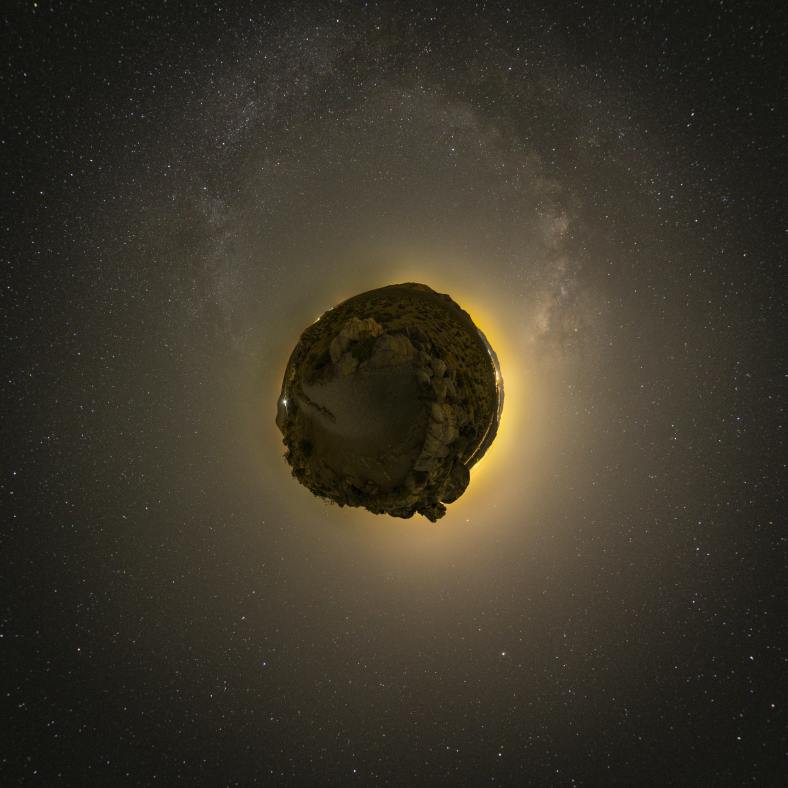
Ever since escaping the humans that had been chasing them, they’d been trying to find their way back with very little luck.  The tracking signal of the Hurricane was clearly wrong, off, or had been tampered with; it was leading them deeper into the asteroid.

Their comm signals couldn’t penetrate the rock to call for assistance; even if they could, anyone with half a brain would be listening in and be able to home in on their signal.  It would stand out against the local chatter.

“I admit,” Cenz said, “That I severely underestimated their hostility to outsiders.”

“You and me both,” she whistled.  “I’ve heard of xenophobia like this, but I always thought it had faded, just something from the early days of contact.”

Cenz seemed to focus on her a moment as they made their way along the tunnel; she felt like the science officer was attempting to discern her mood.

It was sour, she wanted to tell him.

Even besides the obvious, the colony had the worst layout Pirra had ever seen; half of the tunnels simply led to dead ends, and others branched off in random and almost inexplicable directions.

“It seems to me,” Cenz noted, apparently giving up on telling her mood, “that they did not create a centralized plan for the most efficient layout of tunnels.”

“I think that everyone with mining tools just took to walls whenever and wherever they felt like,” she replied.  “Probably how they ended up with tunnels covered in holes.”

The one they’d escaped down hadn’t been the only one; they’d found five others and taken as random a path as they could, their only hope of losing pursuit in a place their enemy would know better than they.

That had been some time ago, though.  Looking down a corridor, it looked the same to her as the last dozen; a squarish tunnel of semi-smoothed rock, that slowly meandered off at an angle.  Like the miner couldn’t even keep his equipment moving straight – or just didn’t care to bother.

“We must be really deep inside this rock by now,” she added.

“Not to be contrary, but I believe we are actually close to the surface.  It concerns me somewhat, as this section does not have the same structural stability as many others.”

She didn’t like the sound of that.  Technically, Cenz could withstand the pressure fairly well, his suit being rated for even explosive decompression.  As was hers – except she didn’t have a helmet on.

“Perhaps we should double-back,” she suggested.  “They won’t expect that, and there’s a lot of places to hide if we hear them approaching.  Plus we might see something we recognize.”

Cenz agreed, and they began to reverse their course.  Unfortunately, the haphazard nature of the tunnels made it difficult, and despite normally having a keen sense of direction, Pirra soon found herself feeling lost.

“I’ve never seen this corridor before,” she noted.  There was a crudely-painted number four on the wall – she’d have noticed that.

“I’m sure this is new,” Cenz agreed.  “But I do not know where we took our wrong turn.  Should we re-trace our steps again?”

“No,” she said.  “At least this suggests people live near here, if they marked it.  If we find someone, we can find out where we are.”

Theoretically, at least.  If they’d talk to her or Cenz without being threatened.  She really didn’t want to have to do that.

“I’m going to turn on my sensor systems to keep a chart of our path,” she decided.  “We can start to get a layout of the place.”

“I’m afraid we can’t,” Cenz said.  “The rules that the colonists laid out for us forbids the use of such sensors.”

“Wait, seriously?”  That was a bizarre decision, and she’d never heard of a colony preventing that.  It was only ever an issue if . . .

They were hiding something.

Cenz continued to speak.  “Apparently some of their equipment is very old, and active sensor mapping can interfere with it.  I’m not entirely certain of the specs of very old equipment design from Earth, but I suppose it’s possible . . .”

“Passive only, then.  Even if that’s against their rules they won’t know.  I can’t imagine attacking us like that was in their rules, either.”

“Ah, yes,” Cenz agreed.  “Probably not.”

The tunnel seemed like it was more built up than most; there were metal plates over particularly rough sections with handholds on them, allowing them to move through the area easily.

“Is that a window?” Cenz asked.

Pirra looked up; she’d been keeping her eyes on her path rather than what lay further ahead.  Down the tunnel, though, there seemed to be a door that was surrounded by glass.  It looked as if it led directly into space.

But that wasn’t possible – they weren’t that close to the surface.  She may have gotten lost, but she felt confident about that!

And who would build a window on a space station around a door?  Windows were just a weak spot, and cheap monitor could provide a view that few biological beings could tell apart from the real thing.

“It is a window,” she realized as they moved closer.  “Look, out there – it’s not space we’re seeing.  It’s more rock.”

Cenz moved to the window and nearly pressed against the glass.  “I see,” he muttered.  “This is a fissure in the asteroid.  It looks nearly solid from the outside, but internally it’s cracking apart.”

He turned his screen to look at her.  “What did they do?  This doesn’t look natural.”

“I have no idea,” she muttered.  “And why a door here?  Is there a tunnel to the other side?”

“Ah, that . . . No, I think I can answer that now.  They took advantage of the opening to put some kind of tram in.  Actually quite a reasonable thing, I suppose.  Better than having to carve out all the rock.”

Pirra pressed her face to the glass, too.  Yes, she could see it now.  It wasn’t a large thing, but it was clearly something akin to an elevator.

“Is it pressurized?”

“The system says it is.”  The eyebrows on his electronic screen arched.  “Care to give it a whirl?”

“Beats floating,” she agreed.

“It has an AI that is asking me my business, but it’s a very simple mind.  I have parsed the data in my response in such a way that the AI should not think to report this incident to anyone.  I cannot be sure, though, that some other part of the system will not make note of it.”

Pirra accepted that – he was the commanding officer, anyway.

She had a feeling, though, that he suspected that something was going on just as much as she did.  This went deeper than local hostility to aliens, there was something going on with the colony itself.

Despite Cenz being in charge, she felt a measure of responsibility for him.  She was the one with survival training, he . . . well, he was a science officer.  Capable, but not trained to the same level as her in this.

“Let’s use it,” she said.  “At the very least we can get back to an occupied area.  Maybe they’ll get pissed, but we can deal with it.”

Cenz popped the door, and they both floated in.

“It moves in four directions,” he noted.  “But gives us no information on where we are – given time I believe I could calculate what direction would take us nearer the surface, but I’d rather move quickly and not dawdle.”

“Agreed,” she said.  “Take us up.”  She realized there was no proper up, and pointed upwards above her head.  “That way.”

“Why?” Cenz asked.

“I have a better sense of three-dimensional places than humans,” she said.  “I have a feeling about that way.”

The screen on Cenz’s suit put on a wry smile.  “With respects, Pirra, I’m not a human and my kind live in the water.  We, too, have a very good sense of three dimensions.”

She realized her faux pas.  “Oh . . . Cenz, I’m sorry, I wasn’t thinking-“

“It’s fine,” he said, letting out a laugh.  Again she saw the flashes of light from deeper in his suit.  “But I think we should move what you would consider down.”

“You’re the ranking officer, sir.”

He chuckled again.  “Just keep calling me Cenz.  But Pirra – do you trust me?”

She blinked and considered.  But she only had to think on it a moment.

“Yes, Cenz.”

“Then down we go.”

< Ep 2 Part 19 | Ep 2 Part 21 >

Episode 2 – Vitriol, part 19


The guard outside of the isolation cell was pale.  A bead of sweat ran down his forehead, and he had jumped when Brooks entered the room.

His prior escort did not follow him in, hanging back like the room was leaking radiation.

Brooks went in, nodding to the guard.

“Open the door,” he said.

“Are you nuts?” the man asked, staring at him, agog.

Brooks gave him a sterner stare.  “Do I look like I’m joking?”

From the other room came the voice of the previous guard.  “The boss gave him permission to see her.”

The man’s face blanched paler, but he turned and pounded on the door.

“Wake up!  Someone’s here!”

The reply was immediate and vicious, if muffled by the door.  “Tell him to go fuck himself!”

The guard gave Brooks a quizzical look, asking without words; do you really still want to go in?

Brooks nodded.

The man unlocked the door and stepped back – all the way out into the next room, and then he closed that door behind him.

Brooks opened the cell door.  It was dark, almost black, in the room beyond.  His HUD adjusted his vision to match it better, and he was able to make out a cot, a very basic toilet . . . and that was it.

“I’m only here to talk,” he said calmly.  “I’m not bringing more trouble to your door.”

“You can still go fuck yourself,” the reply came.

He felt a tingling down his spine; it reminded him immediately of when he’d first met Kell.  It was far more subtle, he didn’t feel sickened by it.  But it was there all the same.

“My name is Captain-Mayor Ian Brooks of the SUC Craton.  May I ask your name?”

He couldn’t actually see anyone, yet he felt like there was someone there.

And then she suddenly was there; she had been the whole time, but for some reason his vision had simply been unable to register her; his HUD had noted her presence, but even being aware of that had been somehow difficult.

She was a short woman, very pale.  Something about her skin looked slightly sallow and unhealthy, save for her hair, which was so dark as to look like ink.  It fell past her shoulders, messy and tangled.

Her eyes were her most noticeable features.  One was brown, but the other was a vivid violet.  In the dark it seemed to glow, to shine with its own light.

His sensors told him it was not sending out light, though.  They said she had a pair of brown eyes.

“Apollonia,” she eventually replied.  She was looking him up and down, and he felt the hairs on the back of his neck raise.  He felt like she was seeing through him, in a way that could not be quantified.

And if their understanding of CRs was right, she was.

“Why are you here, Captain-Mayor?” she asked.

“I only want to talk – peacefully,” he said, holding up both hands to show they were empty.

“They all say they want peace,” she noted, turning and beginning a slow pace back and forth.

“I’ll have to show you I mean it, then,” he said.  “I’ve come to ask if you would like to leave with us – and also if you would join the crew of my ship.”

Her eyebrow arched slightly, but that was the whole of her reaction.

“You would not have to join the crew, but if you did you would become a citizen of the Sapient Union, with all the rights that entails.”

“And the duties and limitations,” she noted.

“If you have particular concerns regarding those, we can address them now.  Yes, there would be duties and responsibilities, but they’re not terrible.”

“You want me because I’m a Seer,” she said.

“Yes,” he replied.  “I won’t lie about that being valuable.  We’ve had encounters with Leviathans, beings that live-“

“I know what you’re talking about,” she said quickly.

“Then you know that people like yourself give a passive protection to those around them,” Brooks added.  “But again – you can come with us and not join the crew.  If you wished to live on the ship, you could do that.  Or we could take you to another system or station and you could live there.”

She scowled at him suddenly, suspicion rife in her eyes.  “This is all so very kind of you, Captain-Mayor.  But why?  You want what I have, but if I don’t want to give that then you’ll have come all this way just to help one woman?  I can’t imagine you spend this much effort helping every asshole who finds themselves in a hole on some shitty frontier colony.”

Brooks was not surprised by her outburst.  “I don’t have that power,” he told her.  “But when I can I do try.  I understand you’ve been accused of a crime – a crime that I think it is clear you did not commit.”

“How do you know?” she demanded.  “For all you know I did murder the sheriff.”

“Did you?” he asked.

She was silent a long moment as she looked at him.

“No,” she finally said.

“There’s never been a CR who could kill someone by looking at them,” Brooks said.  “So I view it as seriously as I would view that claim about anyone.  That is – it’s absurd.”

“Even if I was to agree to come with you, I’m still a suspect here,” she said.  “You can’t just wave your hands and make that go away.”

“I feel confident that I can solve that issue,” Brooks replied.  “But I can’t do that without your help – without you wanting to leave.”  He looked at the cell she was in; it was far smaller than was considered humane for any person to live in, and she had nothing, not even a pad.  “I don’t expect you enjoy it here.”

She pitted him with a hard stare.  Her eyes nearly closed as she looked at him, and he realized she wasn’t actually seeing him anymore; her eyes had rolled back, and through her slitted lids he could only see white.

“I’ll think about it,” she said.  “Now leave me alone.”


< Ep 2 Part 18 | Ep 2 Part 20 >

Episode 2 – Vitriol, part 18


Logus noted Urle walking with his daughters back towards their ship.  He had not had much interest in the tourist goods of the market, but rather in the people of the colony itself.

He had brought as his buddy a simple drone that followed him silently.  Honestly, it was better than a living partner in most ways, as it could watch in all directions and feed that information directly into his system.

It did seem to make the locals cautious about speaking to him, though.

Don’t jump to conclusions, he told himself.  Perhaps they believed he was more important than he was, given that he’d been in Captain Brooks’s entourage when he’d met the governor.  Or they might have been nervous of outsiders.

But there were other, darker possibilities.

Seeing how the locals glared at Kell, he wondered what the Ambassador had done.  Still, there didn’t seem to be any violence brewing.  After observing a few more moments, he moved along the railings, deeper into the colony.

The areas that catered to outsiders soon gave way to service stations for the locals, and this was far more interesting to him.

Logus knew he stood out, but that did not concern him that much.  There were a number of armed guards, and significantly more locals here.  He wondered if they avoided the tourist area for the bad prices or if they were kept out.

People gave him looks, their eyes sunken and cheeks sallow.  A number seemed to be waiting around a medical clinic.

Down from there he saw a comm center that advertised rates for faster-than-light messages off the colony.  The price seemed exorbitant, and Logus didn’t even have half the number of credits needed for sending a message.

Something caught his eye.  A man was staring at him.

He had an air of forced casualness about him, but his eyes were fixed upon Logus.  The spot he was standing in was somewhat boxed in by metal tubing and steam venting from a floor grate.  The guards nearby were not likely to see him.

Logus had seen people like this before – desperate people.

He made his way over, looking at the store fronts and signs.  He walked past the man – he saw the man twitch, as if wanting to reach out and grab his arm, but an armed guard moved past and the man just as quickly went back to looking casual.

Logus stopped outside the message center at an information kiosk.  Still paying some attention to the man, he began to scroll through the available local entertainment and news channels.

It was nearly all imported, much of it from deeper in the system.  What was from outside was at least a decade old; he knew that often these colonies would buy tens of thousands of hours of old serials and sporting events in one block and that was the entirety of their entertainment.

Seeing the selection, Logus had the feeling that they’d gotten ripped off by some trader.  Many of the shows were low in quality and were older than he was.  There were none of the famous Dessei sitcoms or Qlerning dramas – but a lot of human sporting events.  Everything seemed to be made with humans, but looked like the low-budget media that the Aeena studios were famous for.

That guard was still dawdling.  He seemed at least somewhat suspicious of the desperate man, and so Logus resolutely kept from glancing at him, focusing on the various info channels.

He’d almost reached the end.  He recognized a few shows, but realized that most non-humans in them had been edited out crudely.  It seemed remarkably xenophobic.

The guard finally moved on, and the desperate looking man peeled away from his spot and drifted over.

“Need help finding anything, outlander?” he asked.

“I think I’m getting around all right,” Logus replied.  “In a way, I envy you on the frontier.  There must be so much excitement out expanding humanity’s presence in space.”

His words were jovial, but he kept his face serious.  He hoped the man understood.

He clearly did.  Something flickered in his eyes.

“I want to get out of here,” the man whispered.  “Please.  Take me out on your ship.”

Logus was surprised; the man was being much more forward than he’d expected.  “Are you in trouble with the law here?” he asked.

“No, nonono,” the man said.  He moved almost jerkily, like a man barely holding himself together.  “I just can’t stay here anymore.  I have to get out.”

“I’d like to know why,” Logus said earnestly.

“You can help me, then?” the man asked.

“I can’t promise anything, but I’m sympathetic,” Logus said.  “I need to know more.”

The man was silent.  His lower lip twitched, as if he wanted to speak, but he was struggling to find words – any words.

“I’ve lost too much,” the man finally said.  A fire seemed to have entered his eyes, a silent warning.

Logus could tell he needed to back off.  “I see.  May I have your name?”

“No names,” the man said.  “Not until I know where you stand.”

“I’ll have to talk to the Captain,” Logus said.  “However, my recommendation to him will be to allow you to leave with us.”

The man nodded.  “All right.  All right, that’s . . . thank you.”

Logus nodded towards the message center.  “Have you tried contacting anyone before now?”

“Oh no, nono,” the man said.  “They monitor every message.  They don’t want anyone to know.  They have secrets here, outlander.  Secrets that . . .”

His words trailed off, and he suddenly smiled.  “You’re not bad for an outlander.”  He gave a jaunty wave and moved away without another word.

Logus casually looked around and saw the guard.  His gaze was on the retreating man, but did not linger as Logus waved to him.

The guard forced a smile and approached.

“You’ve wandered far, sir,” the guard said.  “Are you lost?”

“Oh no,” Logus said.  “I was just quite taken with your colony.  I don’t suppose there’s any local music scene?”

The guard chuckled and waved him along.  Logus noted that he lacked the same wasted look of many of the others.  If anything, he seemed close to overweight.

He led Logus down the street, around a corner, and through a closed gate.  For a moment Logus thought he was being led somewhere dangerous, but once the gate opened he realized it was something else entirely; a red light district.

“This might be more your speed,” the guard said.  “Try the Roxy and ask for Saint Collette.  Girl is creative as hell.”

Logus forced a smile to the man.  His eyes travelled through the tunnel.  It was narrow, scarcely with room for three men to walk side by side.  The storefronts all offered something warm and human, or at least a close proximity.  Outside of some, the ‘wares’ stood, in outfits that left nothing to the imagination.  None of the girls looked healthy, but their health was largely hidden behind intricate, swirling tattoos that covered large portions of their bodies.

The guard had left already, and Logus considered for a moment talking to one of the girls.  But behind them, lurking in shadows, he saw other men, with flinty eyes.  They didn’t have uniforms or obvious weapons, but were all the more alarming for it.

Logus stepped back out through the gate.


< Ep 2 Part 17 | Ep 2 Part 19 >

Episode 2 – Vitriol, part 17


“Dad, look at this!” Hannah said, pointing to the glass cube.

Turning to look at it, he was not sure what he was seeing for a moment.

Things were moving in the cube, crawling and scurrying in odd little ways.  They were not, however, alive.

“Tedian Moon Fluffs,” the proprietor said.  She looked so very aged, and yet Urle’s system estimated that she was only in her late 70s.  “They come from our home on Tede, and before we were driven out I brought the only mating pair!”

“They’re so cute!  Dad, can we get one?” Hannah asked.

“Yeah, they’re really cute!” Persis added.

He’d forgotten to tell them about Brooks’s order banning alien pets.  It was embarrassing to be as enhanced as he was and still forget things so easily.

These weren’t technically pets, though, he considered.  Just little machines.  If they were reasonable in price he wouldn’t actually mind them.

“How much for a Fluff?” he asked.

“They do best in groups,” the old woman said.  “I couldn’t possibly sell just one – perhaps a pair, at the least?  One for each of your beautiful daughters.”  The woman offered them a smile, though something about it seemed sad.  For a moment Urle actually sensed some honesty in the woman.

But the Fluffs were just cleverly-made machines that did a good job of acting like they were alive.

On the one hand, the scam annoyed him.  But then, if they weren’t alive, it meant they couldn’t die, either . . .

“So how much for a pair?” he asked.

“For such rarities, I normally charge 50 credits a piece – but for you, Outlander, I’ll give you a pair for just 74.”

Even with the discount that price caused him to recoil slightly.  74 credits!

He was not lacking for them – in the Sapient Union they did not even use money, and External Trade Credits were something only issued for use in places that still did.  But he’d only taken 100 credits, and he’d given 15 to each of the girls already.

“That price seems steep,” he noted.

“But daaad, I’ve already named this one!  She likes me,” Persis said, pointing to a blue one.  “Her name is Penelope.”

“And what a lovely name that is!” the old woman said.  “May I ask yours?”

“She’s Persis,” Hannah said, gesturing to her younger sister.

“And she’s Hannah,” Persis said, shoving her older sibling.

“Hey, don’t shove!”

Urle put his arms on both girls shoulders.  They calmed slightly.

“Hannah and Persis?  Those are both wonderful names,” the old woman said.  “Those names both come from the Book of Dawn, the work of our Prophet Tede.  Did you know that?”

His girls didn’t reply, their confusion palpable.

It was obviously something that wasn’t true; the names were ancient, Urle knew, and Ted Corran hadn’t been born until the mid-22nd century.

The woman must have sensed their confusion – and potential objections.  “The Lord of Dawn created all things,” she added.  “From the great to the small to the adorable – including Moon Fluffs!”

Wearing a kindly smile still, her eyes went to Urle.  There was something almost pleading in them.  She was eager for the sale, but there was also something more to it that seemed desperate.

Given the conditions here, Urle realized that such sales were probably all that kept her fed and sheltered.  It was easy to forget in the SU that not everyone had the basics of life guaranteed.

He was about to agree, feeling like he was doing the right thing while also being patronizing, when a new voice spoke.

“These are machines,” Ambassador Kell said.

Urle didn’t know how he had approached without him feeling it; he almost always felt when Kell was near.

The Ambassador picked up the glass cube off the table, peering at the puffs inside.  “They are clever, but just machines.  There is no life in them.”

“How dare you!” the old woman squawked.  She jumped to her feet.  “Put that down immediately!”

She continued to rave furiously, but Kell now only regarded her as if he was eyeing an unappetizing meal.

“Ambassador, I believe you should put that back,” Urle urged.

Kell did so, but the woman continued to be furious.

“How dare you call me a liar, sir!  Is this how you Union types act towards old women at home?” she demanded of Kell.  “Or just those in the colonies?”

They were drawing attention, and Kell still only looked slightly curious.

“You should be calmer,” the Shoggoth replied.  “You are dying.”

The woman’s eyes widened, and both Hannah and Persis gasped in shock.

Urle felt the same way.  “Ambassador!” he snapped.  “I insist you leave this woman alone at once.”

Kell glanced to him.  “I speak only truth, Executive Officer.  I believe she should see a doctor soon.  There is something that grows inside her.”

The old woman sat down, in shock, as Kell walked away.

Urle was too stunned to speak, either.

But he looked to the woman; his sensors had detected no abnormalities in her health on a cursory glance, but he set for a deeper scan and saw that Kell was correct.  The woman had a malignant stomach cancer.  It was small currently, and likely she had few if any symptoms yet.

He let his sensors scan over others nearby.  He kept his scans to passive detection of chemical signals.

Several others near them had tell-tale chemical signatures that suggested they were likewise suffering from cancers.

“Let’s go, girls,” Urle said.

There were many sets of eyes on them, but most were on Kell, who continued to browse along the stalls, seemingly ignorant – or uncaring – of their stares.

Urle was furious at the being, yet part of him was unsure if it was correct.  He sent a private message;

Ambassador, you should not be out alone – return to the ship and speak with me later.

If Kell got it immediately, he offered no reaction, just continuing to walk along the market stalls, looking at their wares.

Not wanting to wait any longer, Urle then continued moving his children along and back to the ship.


< Ep 2 Part 16 | Ep 2 Part 18 >

Episode 2 – Vitriol, part 16


The tunnels and districts of New Vitriol were narrow and cramped.  Each and every section had been laboriously cut into the rock with hand-held equipment, it seemed.  In some areas, they hadn’t even bothered to cover the stony metal walls, just fusing metal sheets into them or even just buffing the stone itself to be a sort of bulkhead.

There was no gravity, either – at least none appreciable – and they had to use handholds stuck into the walls, floors, and ceilings.

It was interesting, in a way; small stores and proprietors could be over their heads or under their feet.  Pirra just wished there was anything interesting in them.

What food stalls she saw seemed to mostly sell different flavors and textures of algae paste, with even pre-packaged survival rations being presented as delicacies.

The prices were all in local work credits, and the prices seemed exorbitant.  Something that looked like it might have been a decent meal cost twice as much as good work gloves.

Not that she was wanting to buy anything; even besides how unappetizing the food was, she had a hunch that the shop owners wouldn’t want to deal with xenos.

It might have been the glares they kept giving to her and Cenz that told her that.

She was glad that Alexander had opted to stay on the ship.  He’d been born on the Phobos colony around Mars, he had little interest in seeing what he called ‘a worse version of that’.

She thought he was just worried he’d say something stupid and cause a fight.  He wasn’t a combative man, except when it came to others reacting poorly to her.  As good a feature of him as that was, this was not the time or the place to go looking for a fight.

“This rock is fascinating,” Cenz said, leaned over and intently studying the wall.  “The composition makes me think it must be an inner-system object that migrated to the Kuiper Belt, rather than something that formed out here naturally.”

Pirra was hardly paying attention.  Something was making her nervous – it was hard for her to tell if it was just the confined nature of the tunnels, the local sentiment or something else altogether.

She was probably overreacting with the locals.  Despite the stares they had gotten, no one had said anything or made a move, and the majority of people just seemed content to ignore them.

Probably they had seen aliens before – certainly they did if any mass-media made it out this way.  Dessei produced even more than humanity in that regard.  Theatrics were a very popular past-time among them both.  And Qlerning dwarfed even Dessei and humans combined in that passion.

She just thought of it in a human term; peacocking.  Some beings just really liked attention.

Sometimes she wished she had been born with a more muted feather scheme.  Some were mottled brown and white – plain, but at least not standing out as much as her bright greens.

But one couldn’t change the colors of their feathers.

“There’s a higher concentration of phosphorus-bearing minerals than I would normally expect.  That’s a good sign!” Cenz continued.  “No wonder they picked this rock.  Phosphorous is vital to carbon-based life, as I’m sure you know.”

She had learned that at some point, but it wasn’t the kind of information that popped up in her mind a lot.

“This might account for the high bacterial growth,” Cenz continued.

The Coral continued to walk along, one of the fingers on his hand opening to reveal a suite of sensors.  As he began to scrape at the wall, evidently taking a sample, a few heads turned their way.

Pirra flicked on her comm.  “Sir, I feel like the locals might be finding your tests a little suspicious.  I think it’s better not to antagonize them.”

“Hm, that’s good thinking,” he replied, standing upright.

“Looks so sturdy,” he said, just loudly enough that the words could carry.  “They’ve done such a good job with this place.”

Perhaps he thought that would help placate them, but she wasn’t sure if they cared about his view of their architectural skills.

“Let’s move on,” she suggested, wrapping her wing drapes around herself and heading away.

Cenz said nothing, but followed her, a calm smile on his face screen.

She noted that her tracking signal for the Hurricane blipped out for a moment.

“Cenz, did you see that with the tracker?” she asked.

“Yes,” he replied.  “That was odd, I’m not sure why it happened.  But we have the signal back.  Would you like to head back towards the ship?”

“Yeah, I think so,” she answered.

As they moved, she saw figures coming out of shadows around them; humans wearing crude cloth masks.  Everything about them appeared to be trouble, from their fake loitering to the tools they gripped.  They seemed more ready to use them as weapons rather than labor.

“This way,” she said to Cenz, taking a turn.  The signal for the Hurricane blipped out again, and this time it stayed off.

“Damn it,” she hissed.

“I’ve got it,” Cenz said.  “It might be getting scattered by something in the asteroid itself.”

Pirra saw the tracker return, but it seemed to be suggesting a different path for her.  Had the signal changed, or had her system calculated a better path?

She couldn’t be sure.

The masked humans had followed them.  Her systems could see right through their masks, figure out the shapes beneath, but the faces of individuals she’d never met had no meaning to her – and importantly, faces scanned this way were frequently inadmissible in trials.

One of them had armor on, she saw, that of the station’s security.  Tape covered his badge and other identifying marks.  His rifle was unslung in his hands.

“Cenz, we might have trouble,” she noted.

“I saw them.  Let’s just keep moving and see if we can head back towards the ship.”

“Understood.”

Cenz took a sharp corner and she followed.  The men behind them seemed to hesitate, and she knew they had good reason; she’d let them see her hand on her sidearm as she’d ducked through.  This narrow tunnel would be a death zone for them if they forced her to use it.

Glancing down the path and following Cenz, she realized that this route had been a mistake; while defensible from the mouth, it was lined with bore holes large enough for a human to hide in.

She had no idea how deep they went.

“Cenz-” she started.

“I know.  Just get through as fast as you can.”

Her scanners tried to measure the depth of each hole, and she strayed nearer the shallow ones, but they were hard to get a good read on.  The metals in them were scattering her scans.

Passing with her back to one, she saw the man too late.  He wasn’t wearing a mask and looked different from the others, grungier.

“Hah!” he said in a cracking voice.  His hand lunged out, grabbing at her wing shrouds.  His hand closed upon a feather and yanked at it.

A stab of sharp pain went through her, but she didn’t let it take her attention.  The feather came off in his hand, and she lashed out with a boot, smashing the reinforced toe into his cheek.

The man’s head snapped back, but he wasn’t stopped.  The look in his eyes grew more crazed, and she realized that he was under the effect of some sort of drug.

He crouched against the rock and lunged for her.

She likewise kicked off the wall, just barely dodging his flailing arms.  Her sidearm came up-

“Don’t!” Cenz cried.

She didn’t shoot.  Instead, she smashed the butt of the pistol against the man’s temple.

In the lack of gravity, he went into a sideways tumble, crunching painfully into the wall and bouncing.  His eyes still looked crazy, but he was, at the very least, stunned.

His cries had attracted attention – or perhaps the others following them took it as a signal.  Silhouettes crowded the end of the tunnel, and someone cried out in anger.

“Get them!”

“Go!” she shouted to Cenz.  The Coral clearly had been figuring out an escape path, and he dove down into one of the holes in the wall.

Giving herself a great push, Pirra followed him.


< Ep 2 Part 15 | Ep 2 Part 17 >

Episode 2 – Vitriol, Part 15


The head of security stood outside the Governor’s office – Hoc Rem, as he recalled.  As Brooks approached, the man let him in without a word, holding the door but making no move to follow him.

Brooks looked the man up and down out of curiosity.  He was heavier set than most people he’d seen so far in the system, and as subtle as it was, it was an important detail.  After many generations away from Earth, it was common for colonial humans to take on slightly different characteristics to better suit their conditions.

The man caught his look and gave him a warning glare.

Neither man said anything, but their looks conveyed more than words could have.

He would be a man to keep an eye on, he thought.

Stepping past the man, Brooks entered the office.

Nec Tede’s seat of governance was notably less beautiful than what Brooks had seen on New Begonia.  It attempted some semblance of dignity, with its vaulted ceiling and arches carved and buffed to a mirror-like finish.

But the trophies, proclamations, monitors, and storage cubbies that lined every surface robbed it of any grandeur that it might have had.  The lack of gravity meant none of it was ever out of reach, and the room seemed to serve as an archive for the colony as well as the Governor’s office.

“Your head of security does not seem to be from here,” Brooks commented to Nec Tede as he came in.  “May I ask where he’s from?”

“You think so, huh?  Well, he’s local, and there’s no man I trust more,” the Governor replied, eyeing him.  “Now pop a sit.  It’ll hold ya down.”  The Governor gestured to a chair bolted onto the floor paneling.

Brooks saw that it was lined with touch fasteners, and decided against it, instead just holding onto the back to push himself to the floor in a standing position.

“You say that the CR has killed a person?”

“CR?” the Governor asked.

“We call them Cerebral Readers – they seem to have a kind of sixth sense for things that others cannot sense.”

“That, and they can kill people by lookin’ at ’em,” the Governor added grimly.  “She did in the last sheriff, ya see.  He came to question her about another death, but she wasn’t gonna listen.  Just looked at him – and like that he had an aneurysm.  Ugly kinda death.”

“And you’re certain it wasn’t a natural death?” Brooks asked.  “I’ve never heard of a CR being able to cause harm.”

Tede did his rather disturbing grin again.  “Captain,” he said.  “Are you implying that I would lie about this?”

“I don’t know why you would,” Brooks replied.  “But I have been sent to find out about this person.”

Tede stuck himself to his chair with a crackling sound from the touch fasteners.  “Well, we can come back to that Captain.  I have some other things you should hear about first.”

Brooks knew that the man was going to haggle with him for the CR.  She wasn’t a human to him, or a criminal, he reckoned.  She was a bargaining chip.  “Go ahead,” he said, keeping his voice neutral.

“This colony here – we face a lot of troubles.  Kicked out, not once, but twice from what was rightfully ours.  We all had a proper legal claim to this system, Captain.  Isn’t a single soul here or on the homeworld that would disagree.  Yet here we are.”

Legally, the man had a point, Brooks knew.  A colony was equally the property of all who set out to settle it.  But there was the matter of what the democratic majority of that colony chose to do – and what a minority chose to do.

If they had left the rest of the colony to found this place, then they couldn’t now be making claims on the parts they had left behind.

“I sympathize, Governor, but I’m not sure why you’re telling me,” Brooks said flatly.

The Governor continued his push.  “There are things we both want, Captain.  How’d you like to bring another system back into the SU, huh?  I’m sure it’d be a shiny pin on your cap.  And you’d get what you want – your CR.  She may be a criminal here, but bonds can be paid in other ways.”

“With membership in the SU?”  Brooks asked.

“That’s just the first part.  And trust me, you’ll be covered in glory.  Saving the last vestige of good people in a system overrun by religious fanatics?  You guys don’t care for this religious shit anymore – it’ll be an easy sell for ya.

“But what I need are colonists.  It’s not like I want you to come in and start blasting the other colonies.  I just want to make us the biggest, best colony.  It’s why we even picked this god-forsaken rock, Captain.  It’s big – big enough to be the start of a nice-sized space port.  Your entry point into this system.  When we control the trade coming through here, we can . . . get the other colonies to change their ways.  Help them to move forward.”

His face turned to an ugly smile.  “But I have to have the bodies.  We’re not even 30,000 people – not even enough to be a viable population.”

Brooks stared at him for a long moment.  “You’re free to apply for membership to the Sapient Union.  You always have been.  You have to meet the criteria for acceptance, however – and you are free to put out calls for colonists.  As long as you disclose all conditions and laws, confirmed by an SU emissary.”

The man scowled.  “That’s it?  You’re not willing to work with me at all?”

“I just laid out the way in which it will happen, Governor.  Now – when can I meet this CR?”

The man continued to scowl, staring at Brooks, and he realized that the man was trying to stare him down.

Brooks mentally tallied his odds.  There were only twenty in his party, and this was a colony of nearly 30,000.  Yet he did not feel afraid, not in the slightest.

The Governor blinked first.  He pressed a button on his desk.

“Rem, tell ’em down in the jail that someone’s coming to see the seer.”

“Right away, Governor,” a voice returned.

For the first time Brooks heard the man’s voice.  His accent was heavy, and nothing like the Governor’s – or anyone they’d encountered thus far in the Begonia system.

Definitely not local, and it explained a lot about why he hadn’t talked.  For such an insular colony to have an outsider this high in command, especially in security, likely meant he was a mercenary.

If the Governor needed that, Brooks thought, then his control of the colony might be in question.

Nec Tede’s eyes had flickered away, but now they came back.  “I’ll have someone take you down there.”


< Ep 2 Part 14 | Ep 2 Part 16 >

Episode 2 – Vitriol, Part 14


The airlock sealed behind them.  There was no need to pump in air, but Brooks pressed on the ‘hold’ button all the same.  Now that they were back inside the Hurricane, he felt secure in talking.

He only need glance to Dr. Logus.

“Interesting fellow,” the man commented.

“With an active imagination,” Brooks added.  “What do you make of his story?”

“That he’s the rightful governor?  That Ban Tede is the paranoid one?  His clear bias against non-humans?  Or his claim that the CR killed a man by looking at him?”

“The last,” Brooks replied dryly.

“Fanciful, at best.  No CR on record has ever been able to do something like that.  And rare as they are, that’s still tens of thousands of cases.”

“So either the CR used some other method or it’s just an accusation.”

“It’s very common for Cerebral Readers to face this sort of problem,” Cenz noted.  “There are no reported cases among my species, but most others have similar conditions – in nearly all of them, CRs face a greatly increased rate of assault, murder, and wrongful imprisonment, along with general social isolation.”

“He’s made his goal clear as well,” Logus said.  “He wants more people.  Perhaps he hopes to barter the CR for your assistance in getting more people here.”

“I can’t say I would recommend the place based on what I’ve seen so far – as short as it’s been,” the Captain commented.

“Nor I,” Cenz said.  “And not even just among my own kind for his clear bias against me.  In the Governor and his entourage I see signs of long-term radiation damage and general poor health.”

Outside the airlock, Brooks noticed that Urle was waiting – and behind him was nearly every other person on the ship.

“We’ll talk more later on this,” Brooks told Logus.  “Gather the information you can, I’d like to know more about this place before I pass judgment on it.”

Opening the door, Brooks stepped into the ship proper.

“Captain,” Urle said.  “That seemed a brief meeting.”

“I’m going to go talk more to Governor Tede,” Brooks told Urle and the assembled crew.  “We have permission to move among the colony, though they clearly have issue with non-humans.”

“Would you prefer we wait on the ship?” Cenz asked.

Brooks shook his head.  “No, I’m not going to force anyone to stay on the ship after that rough ride we’ve had out here.  The Governor said we were welcome and I intend to take him at his word.  The colony still uses a market economy, so we’ll get you all some External Trade Credits, in case you’d like to patronize any small businesses here.”

“I am glad,” Cenz replied.  “I am highly curious to see more of such a young colony.  And still in a rudimentary form of capitalism as well!  It will be fascinating.”

Brooks glanced over them all.  “No one go anywhere alone – just to be on the safe side.  Their bylaws state that the open-carry of weapons is allowed, so I suggest that you all take sidearms.”

“Seriously, Captain?” Cenz asked.

“Yes,” he replied bluntly.  “In places like this they tend not to respect people who are not carrying weapons – I’ve known others like it.”

Urle nodded.  “I’ll unlock the armory and issue sidearms to anyone who plans on going out.”

The Executive Commander noticed Hannah watching through the rest of the assembled crew.  She looked nervous.  He had always taught his daughters to be respectful of firearms, and he knew she had taken to it with something approaching a phobia.

Someday, he’d have to teach her how to use one, he knew.  But he wanted that day to be far off.

“Excuse me,” he said, stepping through the crowd towards her.

“All right, I’m heading out,” Brooks said.  “They have a curfew at 2200 hours, and I’ve sent a sync to your systems to update them to local time.”

Brooks left out the hatch, and Cenz approached Kell, who seemed oddly lost in thought.

“Ambassador, I think I feel like going for a walk.  Would you care to join me?  I know you must be curious to see this new colony.”

“No,” Kell said.

Cenz recoiled slightly.  “Ah . . . my apologies for assuming.  If you do go out, however, please let me know – I will be happy to join you.”

“I will not,” Kell said, not even looking to Cenz.

“Just remember that the Captain has given a directive for no one to go out alone.  I believe this applies even to you, Ambassador.”

The Shoggoth gave no response and moved away, back towards his quarters.  Cenz was left with a puzzled expression on his face as Pirra approached him.

“It’s acting . . . weirder than usual,” she said softly.  Kell seemed out of earshot.  “I thought the Ambassador wanted to see these places.”

“And this is a very unique one, by his experiences.  It does seem as if something is bothering the Ambassador, and I fear he will ignore the Captain’s orders.”

“At least it’s staying on the ship for now.  Perhaps it’s too much too fast,” Pirra said.  “But on the topic of these locals . . . what are your thoughts on them, Commander?” she asked.

“I think I feel like going for a walk and finding out more,” he said.  “You and Alexander are free to join me if you wish.”


< Ep 2 Part 13 | Ep 2 Part 15 >

Episode 2 – Vitriol, Part 13


The hangar in New Vitriol could have fit a ship twice their size and three times their length, but the docking clamps and boarding tube hooked into place without difficulty.

“Connection isn’t very good,” Urle noted.  “Just above the minimum standards.  Air quality is pretty poor, too.  Nothing toxic, but a much higher level of bacteria and chemical compounds than I would call healthy for long-term exposure.”  He glanced to Brooks.

“Keep your kids on the ship for now,” the Captain said.  “And you stay here for the time being.  I’ll take Dr. Logus and Cenz and we’ll go meet their welcoming party.”

“Aye, sir.”

They went down the tube.  On the other end, the airlock door opened, and a man who could only have been the governor was awaiting them.  Along with him were a handful of officials and several guards, only the leader of whom had his face visible.

His grin was surely meant to be friendly, but nothing about it conveyed warmth.  His outfit was a mix of sensible and faded grandiose, with a high collar that appeared to have been cut down after some of the ribbing had folded.

“Welcome to New Vitriol, gents.”  His eyes went to Cenz, and for a moment his smile faltered.  He didn’t seem to know what he was looking at.

There was no gravity on the station, and Brooks floated himself forward, drawing the Governor’s eyes back to him.  “I’m Captain-Mayor Ian Brooks,” he introduced himself, before gesturing to the others.  “Dr. Arn Logus and Commander Cenz.”

“What is he, a fancy drone?” the governor asked, eyes going back to the Commander.

“I am what your people call a Coral or Polyp,” Cenz answered.  “From the Dulea system.”

“An alien,” the man said.  His smile had faded, and he gave Brooks a glare.

“We welcome outsiders, Captain-Mayor, but things aren’t free on New Vitriol.  And prices are higher for some.”

“We’ll be happy to take you up on your hospitality and pay you for your services,” Brooks replied.  “So long as it’s safe for my people here – all of my people.  It is one of the most important laws of interstellar trade – that all travellers can expect welcome and safety.”

“Everyone’s safe on New Vitriol,” the Governor replied, his tone turning a little sour.  “As long as you don’t plan to stay – we don’t promise that.  We got supply problems and we don’t want population in here that’s not going to help us get more population.”  He was looking pointedly at Cenz, then shrugged expansively.  “More bodies means more workers and more workers means more resources.  Surely you understand.”

“None of us are coming to stay, Governor . . .” Brooks trailed off.  “Perhaps a proper introduction is in order.”

“Nec Tede,” the Governor said, then gestured to the guard without a helmet.  “This here’s my Chief of Security and second-in-command, Hoc Rem.”

Brooks nodded to the latter, who regarded him coldly, saying nothing.  He didn’t look like a local; his neck was thick with muscle, as if he’d come from a place with much higher gravity.

But Nec Tede was still talking.  “I’m not just the leader of New Vitriol, but the Rightful Governor of this system – though you wouldn’t know that by talking to that Judas, Ban.”

Brooks wasn’t sure who Ban was, and the Governor must have noticed.  “I heard you just spoke with him – the head man over at Old Vitriol.  Ban is a crotchety bastard who hates meeting face to face.”  The man slid a thumb across his throat.  “Paranoid, ya see, about assassins.”

“Oh my,” Cenz said.  “I was not aware there was a substantial risk of such violence in this system.”

Nec chuckled.  “Just in his mind.  Man is the reason we were banished.  He doesn’t trust anyone with a claim on the Tede line.”

“That’s unfortunate,” Brooks said.  “Governor, we’ve come to speak to you about-“

“I know who you’re looking for.”  The man grinned and tapped his head.  “Word spreads faster than light in this system.  I know the freak you’re looking for – and she’s here.”

With how unfruitful the trip had been so far, even this kind of response made Brooks feel like this was going too well.  “Can you arrange a meeting?  I would like to talk to her.”

“Sure,” the man said.  “That’ll be no problem.  Except you might not live to get a word out.”  The man chuckled, an ugly sound.  “Seein’ as she likes to kill people just by lookin’ at ’em.”


< Ep 2 Part 12 | Ep 2 Part 14 >

Episode 2 – Vitriol, Part 12


Brooks entered the bridge.  Cenz had taken the watch and seemed distracted reading a tablet.  But the being’s attention could go in many directions, and he was fully aware of Brooks’s arrival.

“Commander,” Brooks said, giving him a nod.

“Captain,” the being replied.  “We are only seven minutes from entry to this system’s Kuiper Belt.  Our information indicates that the colony of . . . New Vitriol . . . is a mostly-rocky object approximately ten kilometers in diameter.  We are not aware of how large the population is, but some of the public records we had access to in the last two colonies suggest Vitriol had initially a population of 300,000 or so – thus New . . . Vitriol will have less than that.”

Brooks caught the way the coral hung up on the word.  “Is something bothering you, Cenz?”

“Ah, yes sir.  This name – Vitriol.  It’s hard to translate into my language.  And even when translated, I’m having trouble understanding it.”

Brooks moved to sit.  “Ah, yes.  Well . . . how would you define the word?”

“Angry critique?  But there is an element of the translation that I just do not understand.”

“That’s because the word implies more than anger – there is an element of intentionally wishing harm in it.”

Cenz was silent for a moment, and his face screen went to a strange sort of default blankness.  Lights in his suit flashed in confused patterns, and staring at it was dazzling.

“I understand that many species have had wars and conflicts.  My own people have become involved in those of the Sapient Union, but I was not directly.  In a way, I can understand that these stemmed almost always from material causes – the lack of or desire for something vital to life.”

“But cruelty is not something you are able to really understand,” Brooks commented.

“. . . that’s correct, Captain.”  He was silent a moment before adding; “In some ways I feel it gives me a permanent blind spot when it comes to other species.  Your natural evolution has, for some reason, given your species the ability to have these thoughts.  And yet . . . mine cannot seem to conceive of them.”

Brooks wasn’t sure how to reply to that; it was true, though.  His species was capable of cruelty; it was some kind of by-product of evolution that served a purpose that was hard for him to justify.  And humanity was not alone; most other sapient species had, at least somewhere in their history, shown such behaviours.

None of them were proud of it, but they could not change their pasts.  They could only try now to rise above.

“At times your own kind are difficult for us to understand,” he finally said.  “We’re singular minds, not collectives.  I suppose, though, I am glad that your kind can’t feel it.  You’re not missing out on much of value.”

“Why would they name their colony a term that implies such cruelty?” Cenz asked.

“Anger, I would guess.  They felt slighted, and they wanted everyone to know it.  It’s not a mature thought.  But we are formed largely by our environments and conditions.  Given certain kinds of conditions, we can turn out to think and act in ways that seem insane – even to others of our own species.”

He felt oddly cold, but the only reason he might have felt that would be if Kell was present; yet the sensors confirmed he was in his cabin.

Cenz turned to business.  “We’re about to come back into realspace in thirty seconds.”

Brooks put on the comm.  “All personnel, prepare for reversion to realspace.”

“I will be very grateful to have this shaking cease,” Cenz said.

“Are you feeling all right?”

“Well enough.  I might be what you’d call sore for a few days.  But hopefully we won’t have to leave here immediately, so I can recuperate somewhat.”

Brooks knew he’d have to make sure he fully understood the extent of harm that the being had suffered through the trip.  Cenz was a dutiful officer, and he was not sure if this trip had given him the equivalent of a headache or broken rib.

Making a note to himself to check on that later, he composed himself for their immediate concern.

With a lurch they re-entered real space.

Brooks glanced to Cenz and saw a placid smile on his face, which reassured him.

Checking that everyone else on board was fine, he then switched to external view and found the colony of New Vitriol.

“I’ve sent a message, but we’re just getting an automated reply,” Cenz noted.

Urle entered the bridge, followed by Kell.  The compartment was beginning to feel crowded.

“Uknown ship, follow beacon course laid out for you.”

It was a message, but not an open channel.

Cenz looked to Brooks for orders.

“Take us in,” he ordered.

Kell was staring off, not at the monitors, but just above them.

Urle caught his direction of gaze.  “What is it, Kell?  You look like you’ve just seen a Leviathan.”

“No,” the Ambassador replied.  “But I see something.  There is a presence here . . .”

“What kind of presence?” Brooks asked.  “Is it a danger?”

Kell shook his head.  “I believe it is the seer.”

“Seer?” Urle asked.

“It’s a very old term from the English language,” Cenz chipped in.  “For a being who is able to ‘see’ the future.”

“Or other things,” Kell said.

“Such things are superstition,” Urle noted sourly.

“Perhaps,” Kell replied.

Brooks arched an eyebrow but said nothing on the topic.

“I want everyone dressed and assembled for disembarkment in ten minutes.  We set down in fifteen.”


< Ep 2 Part 11 | Ep 2 Part 13 >

Episode 2 – Vitriol, Part 11


Living on a starship forced anyone to get used to being in a confined space, but the Hurricane was too small for her.

Pirra had felt agitated for most of the trip – partly a result of instinct, and partly the result of personality.  Alexander seemed concerned about her, and it only grated on her more.  It wasn’t his fault, and it was quite caring, but it was still bothering her.

Trying not to show it was taxing.  She forced herself to be deliberate in each action, to focus on the moment.  But when there was little to do in the moment, that became difficult in its own way.

And the most annoying part was that there was something else bothering her, but she just didn’t want to talk about it.

Digging into her bag, she took out a small stone from a pouch.  She didn’t want Alexander to see that she had it and folded her wing drapes around her body.

He glanced at her out of the corner of his eye.  He knew when she was hiding something, but he said nothing, for which she was grateful.  The hardest part of their marriage had been unlearning aspects of their own behaviour that did not mesh.  Humans seemed more open in general than her kind, who had higher expectations of privacy.

Going into the central corridor, she began pacing – or the equivalent, in zero-g, simply pushing herself one way down the hall and then back the other way.  They had gone through the dashgate only an hour before and it would be another seventeen before they even arrived at this third colony.

The ship was vibrating again, but at least not as much as it had been during the first dash, and even if she could only feel it when she touched a surface, the sound was alway there.  The Executive Officer had taken the time before they entered to try and attune the ship better to the gate.  It was newer, though already showing some signs of worse maintenance than the first.

Urle had figured that within ten years it’d be far worse than the first one, and it all just made her wonder how these colonies ever hoped to grow without caring for their own infrastructure.

Now the rattling of everything was grating on her.  It reminded her of a steep cliff starting to collapse.

“Too many things compounding,” she said softly, opening her hand to look at the stone.

It was only five centimeters long, pierced with smooth holes not quite large enough for a finger to go in.

It was silent in her hand, but given a good wind it would have sung.

A heavy clunk caused her to look up.  Closing her hand around the stone, she saw the Chief Science Officer as he came around the corner.  She came to attention and saluted him.

The electronic face on Cenz’s suit turned to a polite smile.  “At ease, Lieutenant.  I see I am not the only one out for a walk,” he said cheerfully.

“It helps a bit,” she replied neutrally, letting her salute drop.  It would have been overly-formal even on-duty, but she’d felt caught.

Perhaps Cenz knew that.  “I can leave you to your walk if you wish,” he said.

She struggled with the desire to say yes.  Cenz was possibly the nicest and most innocent being she had ever known, and adored conversation.  To walk away from him now felt like being mean to a child.

“It’s fine.  How are you, sir?  I hope this leg of the journey is not bothering you as much as the last.”

“The last was quite unpleasant,” he admitted.  “But only that – this leg is only . . . well, annoying.  I cannot actually quantify this, but I think I feel the vibrations far more than the rest of you and it makes all of me want to hide in their shells.”

She knew only a little about the biology of his species; a hundred or so individual polyps that cooperated with complex neural nets they built between chunks of calcified rock that were constructed over long periods of time.  Each polyp was only somewhat intelligent, but when many combined they formed an impressive intellect.

He started to move along again and she kept pace.  Even here, it was incredible how easily he seemed to move; on the Hurricane they were functionally in zero-gravity.  But to move that water-filled suit in the artificial gravity of a place like the Craton had to require massive strength.

“May I ask you a question, sir?” she asked.

“Of course,” he replied.  “And please – you can drop any title or formality.  They’re one of the few aspects of being on the Craton that I dislike.  There is no hierarchy among polyps.”  He chuckled, and she gave a smile.

It occurred to her that they had both become so used to being around humans that they were both faking their mannerisms to each other.

“Is it true that on your homeworld your species are not anything like a humanoid or biped?”

“Your information is accurate,” he replied.  They reached the end of the corridor and turned to float back down the other way.  “We are something more like crawling masses on our homeworld – it works well for moving over reefs in the shallow seas we come from.  However, we may form our sections as we like, and while early contact had us being in such forms, we realized that being more humanoid would help us relate with such species better.”

“Was it hard to learn to become . . . a biped?” she asked.

He considered a moment, his screen appearing thoughtful.  “In a way.  It is somewhat like the strength-training a species might undergo before moving onto a higher-gravity world.  We don’t usually break ourselves up, but there’s no reason we can’t, if we’re careful.  So I spent a few years breaking myself into smaller pieces and then rearranging them into something like a humanoid.”

“A few years?”

“I know it sounds like a lot, but while I was doing that I was also getting an education on living among other species – so it was not as boring as it sounds.”  He laughed again, and for a moment she saw specks of light in the water around his face screen.  The polyps were lighting up in different colors – perhaps that was his own kind’s form of a laugh.

“Still, that sounds like a lot of effort.”

“I won’t lie – it was!  But it was worth it.  Because now I can walk and talk face-to-face with beings such as yourself, or the Captain.”

“Does it become awkward among your own kind?”

“Not really – we have no defined shapes.  They will know from looking that I took this form, and surely figure out why.  But if anything, it will only lead to some more questions!”  He looked down to her hand.  “May I ask you a question now, Pirra?”

“It only seems fair, sir.”

“Just Cenz, if you please.  What is that you’re holding?”

She hadn’t realized he’d noticed it.  With how clunky his suit looked, and how his face screen only showed forward, it was easy to imagine he didn’t see well.

“Oh, it’s . . . it’s a singing stone,” she said.

“A singing stone . . . oh, yes, from your homeworld.  They have quite the significance to some groups there, from what I understand.  I hope my question was not rude.”

“No, sir- Cenz.  You’re fine,” she said, opening her hand to look at it.  “You’re right, though.  Among some groups on my homeworld, these were quite important.”

Cenz was quiet a moment.  When he spoke again, her translator turned his voice a little softer.  “I am not an expert on your people’s cultural history, Pirra, but I understand that there was much sectarian violence on your world until the last few centuries.”

She wasn’t sure how to reply to that.

“It’s not an issue anymore,” she finally said.

“Ah,” Cenz replied.  He seemed uncertain.  “That’s . . . good to hear.”

She put the stone in her pocket.  “Thank you for the conversation, Cenz.  I think I’m going to return to my cabin.”


< Ep 2 Part 10 | Ep 2 Part 12 >